
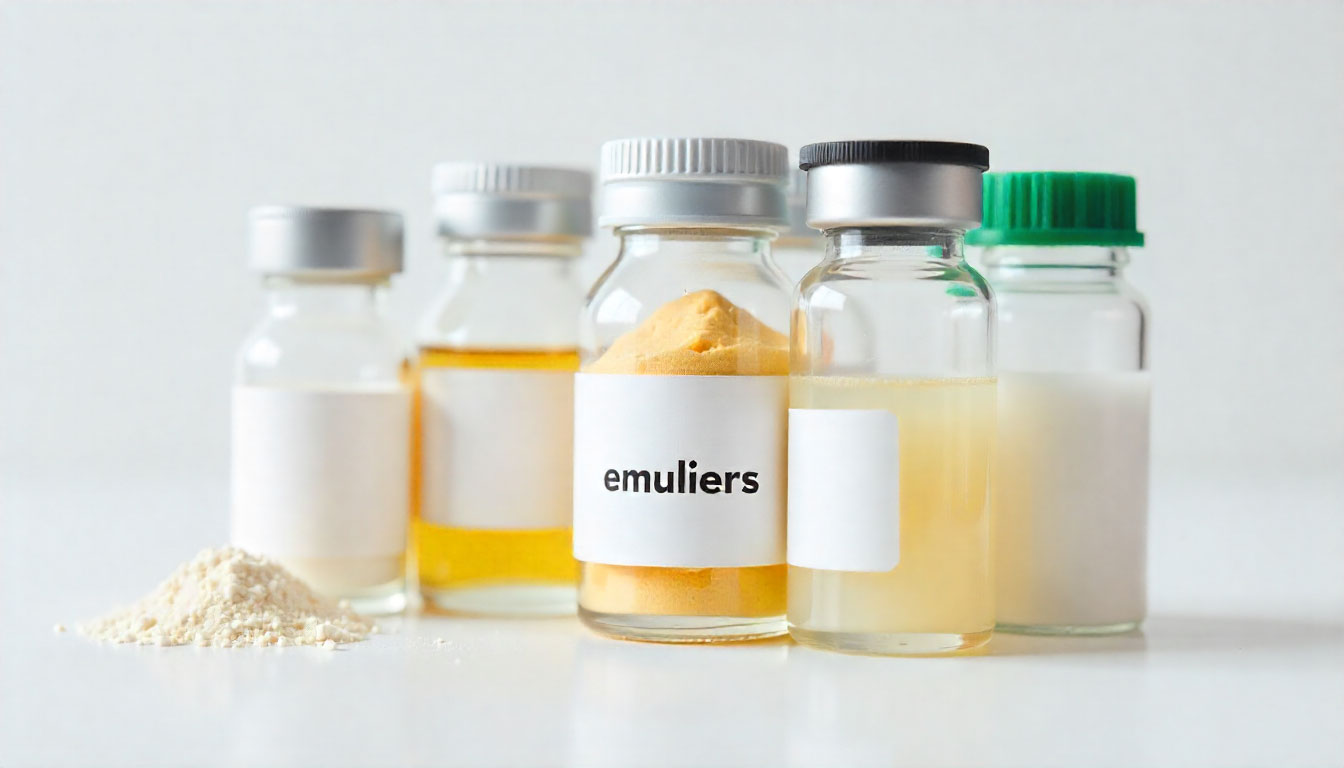
How to Use Food-Grade Emulsifiers and Stabilizers in Healthy Cooking?
SUBSCRIBE TO OUR BLOG
Promotions, new products, and recipes.
As modern-day consumers become more health-conscious, clean-label cooking has gained momentum and almost evolved into a lifestyle choice. From home cooks to professional chefs, the emphasis is on natural or plant-based ingredients and not chemicals and artificial additives. That’s how food-grade emulsifiers and stabilizershave become an integral part of cooking today. The things that were once restricted to commercial food production are now heavily used in home kitchens as well to improve shelf-life, consistency, and texture naturally and safely.
From creamy salad dressings to dairy-free ice cream and gluten-free baked goods, plant-based stabilizers and emulsifiers help deliver professional-quality results without compromising health.
Emulsifiers and Stabilizers: What Are They?
Emulsifiers assist in blending those ingredients that tend to separate such as oil and water. Without adding them sauces won’t ever have that smooth consistency, the salad dressing would, and chocolate will not have its smooth texture.
Stabilizers, on the other hand maintain the structure and long-term consistency of any food item. It also adds a kind of thickness to them. The mouthfeel you enjoy in sauces and desserts and the prevention of ice crystal formation in frozen food is owed to a food-grade stabilizer.
When it comes to clean-label cooking, several natural ingredients perform both functions, making them versatile and highly valuable.
Popular Clean-Label and Food-Grade Emulsifiers and Stabilizers
Emulsifiers
Stabilizers
- Sodium Alginate powder
- Tara gum powder
- Kappa carrageenan
- Locust bean gum
- Propylene glycol alginate
- Lambda carrageenan
- Agar agar
- Potassium alginate
- Calcium lactate gluconate
- Carboxymethyl cellulose
- Xanthan gum
- Guar gum
- Konjac gum
- Iota carrageenan
- Acacia gum or Gum Arabic
These ingredients are widely accepted in natural and organic food formulations and align perfectly with clean-label standards. The plant-based and low-fat/ low-sugar emulsifiers include sunflower lecithin and acacia gum. On the other hand, the low-fat/ low-sugar and clean-based ingredients that function as stabilizers and thickeners are agar-agar, carrageenan(Kappa, Iota, Lambda), locust bean gum, guar gum, xanthan gum, sodium/potassium alginate, and carboxymethyl cellulose.
Here is the dosage guide for home use:
Precision is crucial when working with food-grade emulsifiers and stabilizers. Using too little does not work while using in excess quantities may ruin the texture.
- Sunflower lecithin : Half to one teaspoon per cup of liquid
- Guar gum: One-eighth to one-fourth teaspoon per cup of liquid
- Xanthan gum: One-eighth teaspoon per cup of liquid
- Agar-agar : One teaspoon per cup of liquid
- Acacia gum or Gum Arabic : one-fourth to one teaspoon per cup of liquid
- Kappa carrageenan : One-eighth to half teaspoon per cup of liquid
- Locust bean gum: One-eighth to one-fourth teaspoon per one cup base
- Sodium alginate : Half teaspoon to one teaspoon per cup of liquid
- Potassium alginate: Three-fourth to one and one-fourth teaspoon per cup of liquid
- Carboxymethyl cellulose: One pinch to half teaspoon per cup of liquid
- Calcium lactate gluconate : One-fourth to one teaspoon per cup of liquid
So, the dosage is more or less same for most ingredients here but they may differ based on the goal of the dish being prepared. Moreover, every natural thickener and stabilizer has its way of usage when used for home cooking. So, you need to stick to it for the best outcome.
Everyday Usage of Clean label Ingredients
The plant-based emulsifiers and stabilizers are extensively used in the preparation of salad dressings, dairy-free ice cream, gluten-free baking, vegan desserts, along with soups and sauces. Well, these ingredients can also be used for various other recipes that home cooks might be curious to experiment with and achieve professional-quality results.
Vegan recipes with Clean-Label Ingredients
Creamy Vinaigrette
Ingredients
- ½ cup olive oil
- ¼ cup apple cider vinegar
- 1 teaspoon Dijon mustard
- ½ teaspoon sunflower lecithin
- ⅛ teaspoon xanthan gum
- Salt and black pepper to taste
Preparation
- Add vinegar, mustard, lecithin, and xanthan gum to a blender
- Blend for 15–20 seconds until smooth
- Slowly drizzle in the olive oil while blending
- Season with salt and pepper
It results in a smooth and glossy dressing that stays blended for up to seven days when refrigerated
Vegan Chocolate Mousse
Ingredients
- ½ cup aquafaba (chickpea cooking water)
- ½ cup melted dark chocolate
- ½ teaspoon sunflower lecithin
Preparation
- Whip aquafaba until it forms stiff peaks
- Stir lecithin into the warm melted chocolate
- Gently fold the chocolate into the whipped aquafaba
- Refrigerate for 2 hours before serving
It is a light and airy mousse with rich chocolate flavor and clean emulsification.
Plant-based Fruit Jelly
Ingredients
- 1 cup fruit juice
- 1 teaspoon agar-agar
- 1–2 tablespoons natural sweetener
Preparation
- Heat the fruit juice with sweetener until warm.
- Add agar-agar and bring to a gentle boil
- Simmer for 2 minutes, stirring constantly
- Pour into molds and let them cool at room temperature
The result is firm and glossy jelly that sets without refrigeration or gelatin.
You just need to avoid these mistakes when preparing vegan dishes using clean-label ingredients:
- Adding gums directly to hot liquid, causing clumps
- Using excessive ingredients resulting in slimy textures
- Failing to blend emulsifiers properly
- Ignoring precise measurements
Remember that accuracy is the key to success and a perfect outcome.
Conclusion
Food-grade emulsifiers and stabilizers are powerful tools for healthy and clean-label cooking. When used correctly, they help home cooks and food brands create smoother sauces, creamier desserts, improved gluten-free baked goods, and longer-lasting foods naturally and safely. Let your cooking and formulations come out wonderfully with clean-label and food-grade ingredients from Cape Crystal Brands. From premium emulsifiers and stabilizers to specialty powders that deliver consistent and high-quality results, everything is crafted to help you create better food with confidence and transparency. Visit to bring more precision and performance to your cooking.
FAQs
Are plant-based emulsifiers and stabilizers healthy?
Yes, most of the ingredients are natural, low-fat, and gut-friendly.
Which are the cleanest emulsifiers?
Sunflower lecithin and acacia gum are among the cleanest emulsifiers.
Which plant-based stabilizers work best for ice cream?
Locust bean gum, guar gum, and CMC are the ingredients that work best for creamy texture.
Are clean-label ingredients safe for daily use?
Yeas, they are safe for daily use when used in requisite quantities.

|
About the Author Ed is the founder of Cape Crystal Brands, editor of the Beginner’s Guide to Hydrocolloids, and a passionate advocate for making food science accessible to all. Discover premium ingredients, expert resources, and free formulation tools at capecrystalbrands.com/tools. — Ed |
When Clean Labels Still Produce Unsettling Food
The Texture Gap: Why Homemade Food Feels Different Than Packaged Food

Hydrocolloids Explained: Food Gums, Gels and Texture
Enjoyed this post? Subscribe to The Crystal Scoop
Food-science tips, ingredient know-how, and recipes. No spam—unsubscribe anytime.
- Choosing a selection results in a full page refresh.