
How Small Ingredient Choices Quietly Change Appetite, Digestion, and Satisfaction
SUBSCRIBE TO OUR BLOG
Promotions, new products, and recipes.
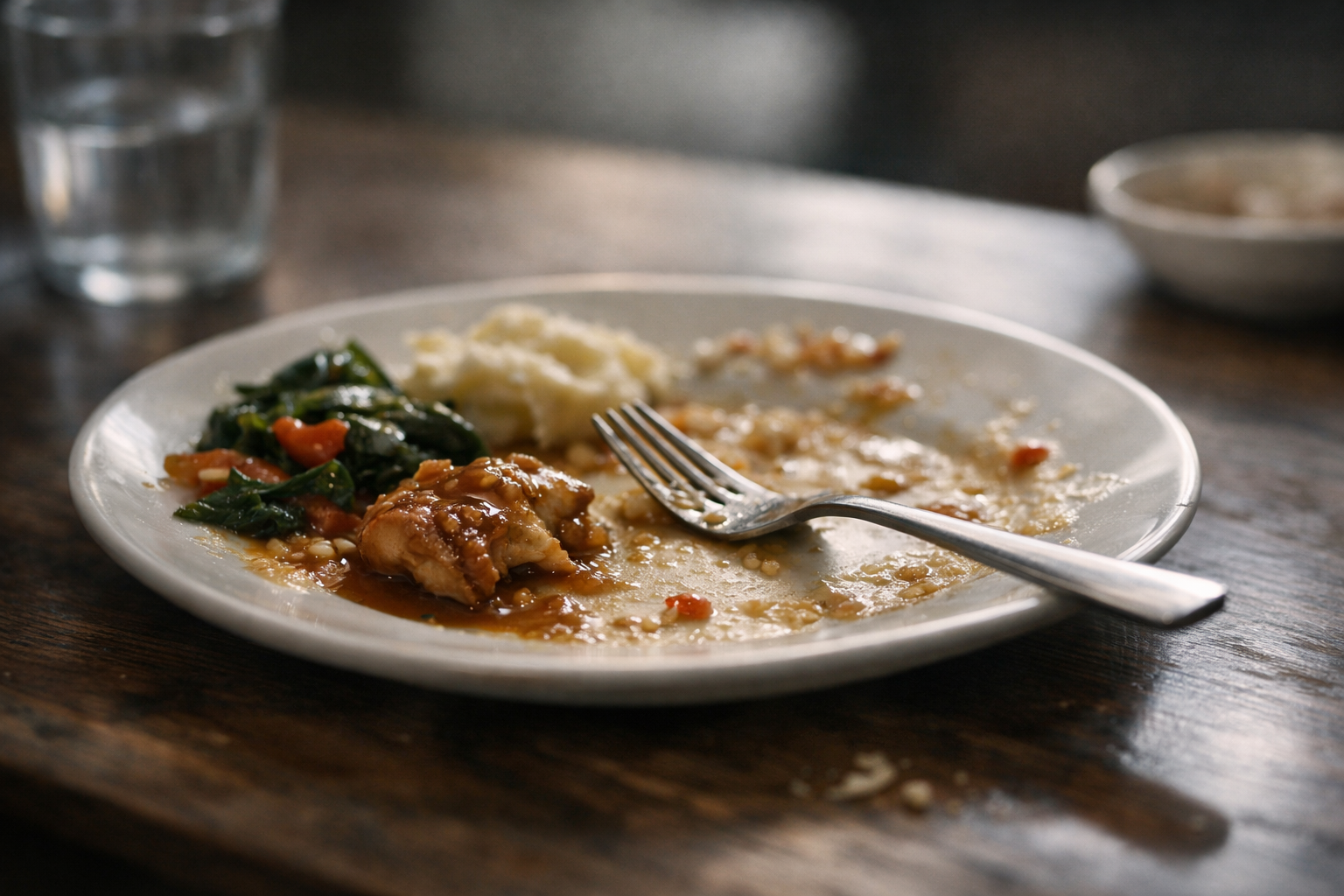
You finish eating, and nothing feels wrong.
The plate is empty. The flavors were clear, even pleasant. There was no moment of obvious disappointment, no missed seasoning, no off texture, nothing you could point to and say that’s why this didn’t land. And yet, a few minutes later, something lingers. Not hunger exactly. Not fullness either. Just a kind of quiet incompletion, like a sentence that ended without quite resolving.
So you reach for something else. Not out of need, but to close the loop.
It’s a familiar experience, but difficult to describe without sounding vague. The food was fine. You ate enough. Still, it didn’t settle.
What’s strange is how often this happens now without being noticed. Not as a failure, but as a background condition something so common it stops registering as unusual.
Because nothing obvious is wrong.
There’s a subtle tension here.
We tend to think of appetite as something driven by quantity, how much you ate, how filling it was, whether it was “enough.” And when that doesn’t explain the feeling, we reach for other familiar explanations: maybe it wasn’t rich enough, or too light, or missing something specific we can’t name.
But those explanations rarely hold up under closer attention. You can eat something dense and still feel unsatisfied. You can eat something light and feel completely done. The usual markers of portion size, intensity of flavor, and even how “balanced” something seems don’t reliably predict whether a meal will actually finish the experience of eating.
What’s missing from that way of thinking is structure.
Not in the architectural sense, but in how the food holds together, breaks apart, resists, dissolves. The way it occupies the mouth over time. The sequence of signals it sends as you chew, swallow, and wait.
These aren’t things most people consciously track. But the body does.
Take the moment just after a bite.
There’s an immediate impression of flavor, temperature, maybe a hint of texture but that is only the beginning.
What follows is less obvious: how long the bite lasts, how it changes as you move it around, whether it gives way easily or requires effort, whether it stays cohesive or disperses into something harder to gather.
This progression matters more than we tend to think.
When food maintains a certain integrity as you eat it, when it resists just enough, then yields, then clears, it creates a kind of rhythm. A beginning, middle, and end within each bite. The mouth stays engaged, not just with flavor but with movement and change. There’s a sense of participation.
When that structure is missing, something else happens.
The bite arrives, but it doesn’t really develop. It either disappears too quickly or collapses into something uniform, requiring less attention to process. You can still taste it. You can still swallow it. But the experience is flatter, more compressed.
And without that internal progression, the body seems to hesitate.
Not in a dramatic way. Just a slight delay in registering that something meaningful has occurred.
This is where appetite becomes difficult to interpret.
Because appetite isn’t only about needing more. It is also about whether the previous experience reached a point of completion. If the signals from chewing, swallowing, and digesting don’t quite align, the body doesn’t fully “close” the event of eating.
So it leaves it open.
That openness can feel like mild restlessness. A desire for something else, even when you’re not hungry. A sense that the meal hasn’t quite counted, even though it should have.
And often, the response is to keep going. Another bite, another item, something different to fill in the gap.
Not because you lack discipline, but because the experience itself was never resolved.
Digestion plays a role here too, though not in the way it’s usually discussed.
We often think of digestion as something that happens later, out of sight, after the meal is finished. But it begins much earlier, shaped by the same structural qualities that influence how food feels in the mouth.
When food arrives in a form that’s already highly uniform, already close to what the body would otherwise break down into, the process becomes more passive. There’s less transformation required, less sequencing of signals as the body works through it.
Again, nothing is “wrong.” The system functions. Energy is extracted. Nutrients are absorbed.
But the pacing changes.
Instead of a gradual unfolding, where different stages of digestion echo the earlier stages of eating, everything compresses. Signals that would normally arrive in a staggered way, contributing to a sense of fullness that builds over time, can blur together or arrive too quickly, then fade.
The result isn’t discomfort. It’s something subtler: a shortened arc.
You eat. You feel something. Then it’s gone sooner than expected.
And you’re left in that same in between space.
What makes this difficult to notice is that none of it presents as a clear problem.
There’s no single moment where you can say, this is the issue. No dramatic symptom, no obvious failure. Just small mismatches, repeated often enough to become normal.
Over time, those mismatches start to shape how eating feels as a whole.
Meals become less about completion and more about continuation. Satisfaction becomes something you chase across multiple attempts, rather than something that arrives and holds.
And because the flavors are still there, often more pronounced than ever, it's easy to assume the experience should be satisfying, even when it isn’t.
That assumption can be hard to question.
If you start paying attention to it, though, the pattern becomes difficult to ignore.
The difference between a meal that ends cleanly and one that lingers unresolved doesn’t announce itself. It’s not about intensity or variety or even how much you enjoyed the taste.
Some of these patterns become easier to recognize when you look at how real foods behave, not just how they taste.
Where This Shows Up in Real Food
When you begin to look for it, the difference becomes easier to see.
A yogurt that feels full and rounded versus one that thins out too quickly.
A sauce that coats and lingers versus one that slips away.
A baked good that holds structure as you chew versus one that collapses into paste.
Often, the difference comes down to small formulation choices.
Ingredients like hydrocolloids (such as xanthan gum, guar gum, or pectin) and mineral salts don’t just stabilize a product on a shelf. They shape how food behaves in the mouth — how long it holds together, how it resists, how it releases flavor, and how it breaks down over time.
Even at very low levels, these ingredients can change the entire arc of eating:
· slowing how quickly food disappears
· improving how it holds together as you chew
· extending the duration of flavor and texture
These are often invisible choices in formulation, but they are exactly the ones that separate food that simply tastes good from food that truly satisfies.
And with that, they influence something less visible but just as important — whether the meal feels finished.
Whether each bite moved through a sequence that felt complete. Whether the body received signals in a way that built toward an ending, rather than scattering or compressing them.
Once you notice that, it changes how you read the feeling that comes after eating.
That quiet restlessness isn’t random. It isn’t just habit or preference or lack of willpower. It’s often the residue of something structural, something that happened, or didn’t happen, while you were eating.
And the next time you reach for something else, it may not be because you want more.
It may be because the experience is never fully resolved.
Not a failure of appetite—
but a failure of structure.
The Science of Satiety & Structure
Master the hidden physics and chemistry of your kitchen with Ed McCormick.
- → Meet the Expert: About Ed McCormick
- Part 1: Why Some Foods Never Feel Filling
- Part 2: Silent Architects: Texture, Structure, and Satiety
- Part 3: Why Food Tastes Fine but Feels Wrong
- Part 4: Mouthfeel: Brain vs. Tongue Satisfaction
- Part 5: The Hidden Role of Structure in Blood Sugar Spikes and Crashes
- Part 6: Why Ultra Processed Foods Feel Hollow
- Part 7: How Modern Food Lost Its Natural Stop Signals
- Part 8: The Texture Gap: Why Homemade Food Feels Different Than Packaged Food
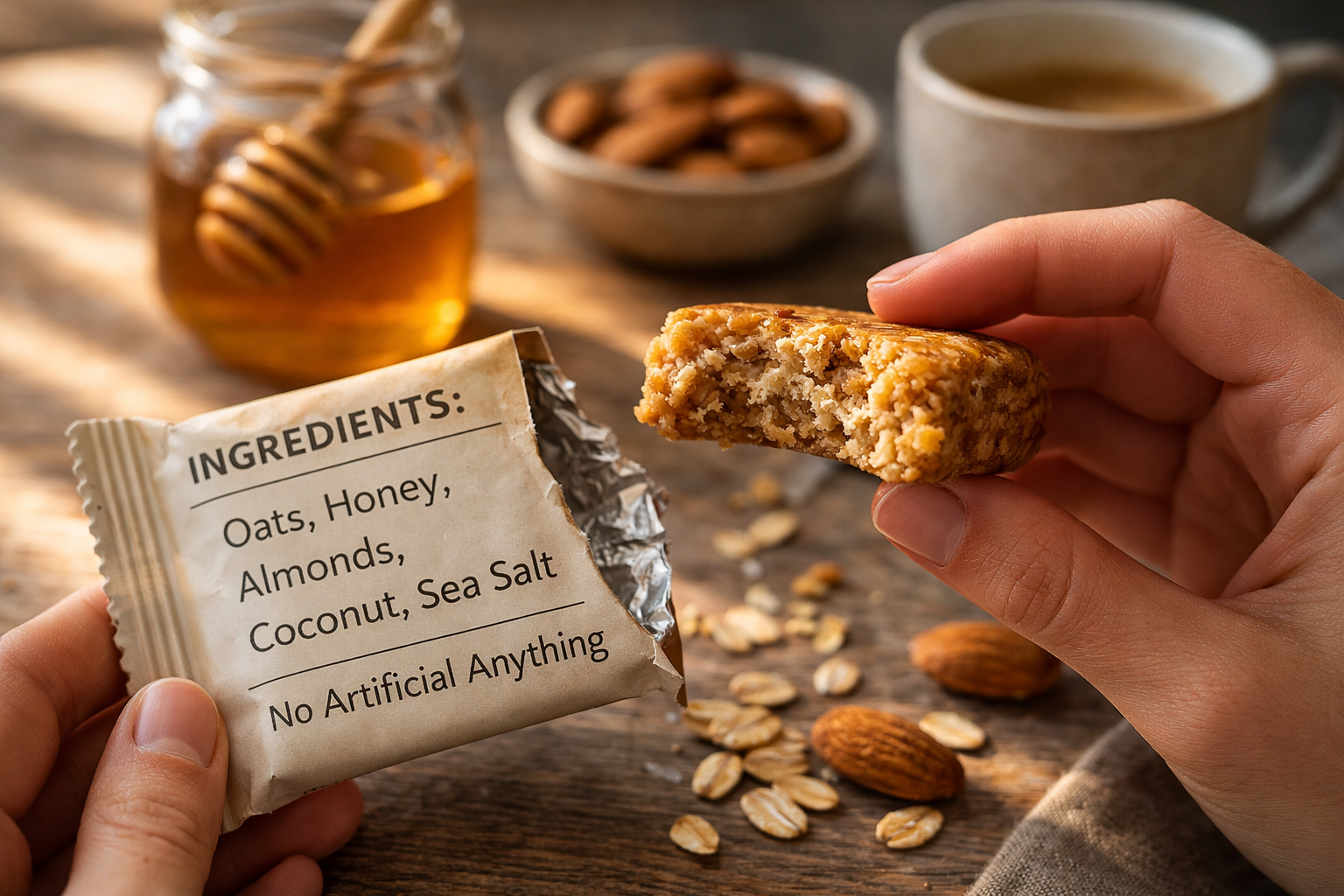
- Part 9: When Clean Labels Still Produce Unsettling Food

|
About the Author Ed is the founder of Cape Crystal Brands, editor of the Beginner’s Guide to Hydrocolloids, and a passionate advocate for making food science accessible to all. Discover premium ingredients, expert resources, and free formulation tools at capecrystalbrands.com/tools. — Ed |

Why Storytelling Matters in Food, Flavor, and the Modern Pantry

The Story Behind The Genuine Carroway Cookbook and Island Advice Journal
When Clean Labels Still Produce Unsettling Food
Enjoyed this post? Subscribe to The Crystal Scoop
Food-science tips, ingredient know-how, and recipes. No spam—unsubscribe anytime.
- Choosing a selection results in a full page refresh.