
When Clean Labels Still Produce Unsettling Food
SUBSCRIBE TO OUR BLOG
Promotions, new products, and recipes.
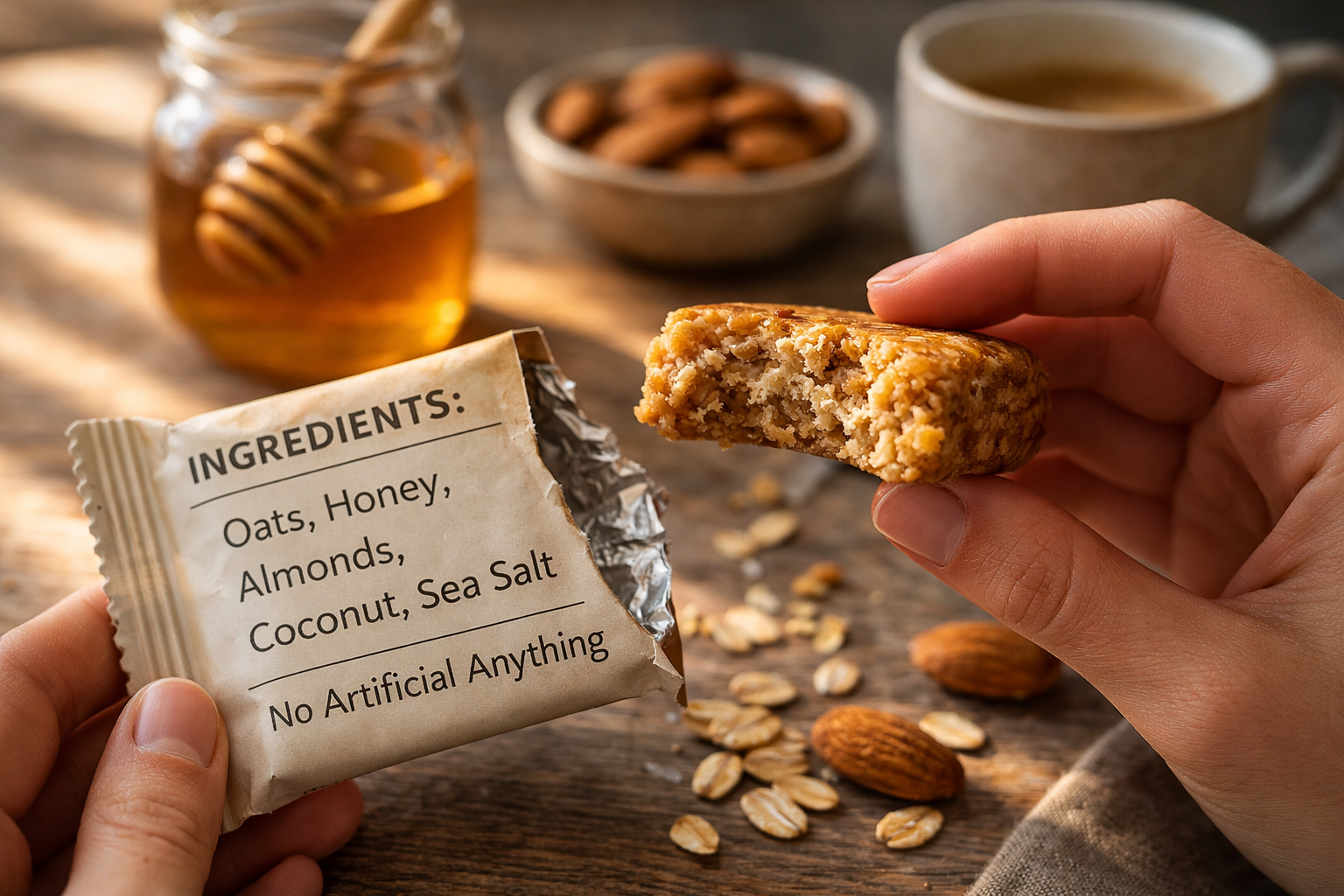
You open something that looks reassuring.
The label is short. The words are familiar. Yet many foods with these reassuring labels produce an oddly unsatisfying eating experience. Nothing complicated. Nothing chemical-looking. The kind of list that quietly signals this should feel like real food.
And yet the experience is strange.
Many people notice this experience but rarely know how to describe it:
Why do some foods with simple, clean ingredient labels still feel strangely unsatisfying?
The first bite tastes fine, sometimes even good. Nothing offensive. Nothing obviously artificial. But a few bites in, something feels slightly off. Not wrong exactly. Just… unsettled. The food disappears too quickly in the mouth, or it lingers in a way that doesn’t quite resolve. You finish it, but the experience doesn’t feel complete.
It’s the small moment when taste and satisfaction quietly separate.
This is the tension many people notice but rarely have language for. Food can appear simple, even honest, and still produce a subtle sense that something isn’t quite landing where it should.
Not because the ingredients are unfamiliar.
Because the structure is.
The Difference Between Flavor and Structure
Most conversations about food start with flavor. Sweet, salty, savory. Strong or mild. Balanced or overwhelming.
But flavor is only one layer of the eating experience. Beneath it is something quieter: how the food holds together, how it breaks apart, how it moves across the tongue, how long it takes the mouth to finish the work.
A cracker that snaps before dissolving, a cheese that stretches before melting, or bread that resists slightly before breaking apart—these structural moments shape satisfaction as much as flavor itself.
These physical signals shape satisfaction long before we consciously notice them.
Food that feels complete tends to follow a certain rhythm. It resists slightly when bitten, then yields. It dissolves gradually rather than collapsing immediately. The mouth stays engaged just long enough for the body to register that something substantial happened.
When that rhythm is missing, flavor alone can’t carry the experience.
You can taste something pleasant and still feel oddly unfinished.
The Science Behind Food Structure
Food scientists refer to the physical behavior of food as food structure or the food matrix.
This structure determines:
- how food breaks during chewing
- how moisture is released
- how long flavor stays in the mouth
When structure is weak or overly uniform, food can taste good but still feel incomplete.
The Rise of the Clean Label Promise
Over the past decade, food packaging has leaned heavily on a particular promise: simplicity.
Short ingredient lists. Familiar words. The absence of anything that looks industrial. This idea often called the clean label, has become shorthand for transparency and trust.
And in many ways, it has improved how food is presented. Long chemical names disappeared from many products. Labels became easier to read.
But something subtle happened alongside that shift.
The focus stayed almost entirely on what is listed, not on how the food is physically built.
Clean labels talk about ingredients. They rarely talk about structure.
Modern food manufacturing often prioritizes shelf stability, softness, and uniform texture. These properties help products survive packaging and shipping, but they can also compress the natural stages of chewing and breakdown that traditionally signaled satisfaction.
Why Structure Matters More Than We Realize
When food feels satisfying, the body is responding to more than flavor.
There are physical cues happening in the background: resistance during chewing, gradual breakdown, and the way particles disperse in saliva. These cues signal to the brain that food is being processed and handled.
When structure is too fragile or oddly uniform, those signals become faint.
Food can melt instantly instead of breaking down gradually. It can form a paste rather than distinct particles. It can dissolve before the mouth has time to register effort.
The result is a sensory contradiction: the flavor arrives, but the physical experience ends too quickly.
And when the body receives incomplete signals, satisfaction often fades with it.
The Invisible Role of Food Architecture
Behind every familiar food is a kind of hidden architecture.
Food scientists sometimes refer to this as food structure or food matrix, the arrangement of particles, moisture, and proteins that determines how food behaves in the mouth.
The arrangement of particles. The density of the structure. The way moisture is held or released. These properties determine whether something crumbles, stretches, flakes, or dissolves.
Traditional foods developed these structures slowly through cooking methods, fermentation, aging, and mechanical preparation. Over time, the mouth learned to recognize the signals it produced.
Modern manufacturing approaches are structured differently. It often aims for precision, consistency, and efficiency. The physical arrangement of food becomes engineered for stability and shelf life as much as for eating.
None of this necessarily changes the flavor.
But it can subtly reshape the way the food behaves in the mouth.
And when structure changes, satisfaction often follows.
When Simplicity Doesn’t Mean Familiarity
Clean labels suggest that food has returned to something closer to its original form.
But a short ingredient list doesn’t automatically recreate the physical behavior that older foods once had.
Structure can be rebuilt in many ways. Sometimes the goal is softness. Sometimes uniformity. Sometimes, a particular mouthfeel that survives packaging, shipping, and storage.
These adjustments are often invisible to the eater.
What remains visible is the label simple, reassuring, quiet.
Yet the eating experience can still carry small inconsistencies. The way something collapses faster than expected. The chewing stops sooner than it should. The way fullness feels is oddly delayed.
The label says simplicity.
The body notices something else.
The Feeling of “Almost Food”
People often describe this experience in indirect language.
“It tastes good, but I want something else afterward.”
“It feels light, but not in a satisfying way.”
“I finish it quickly and still feel like I didn’t really eat.”
These reactions are rarely about hunger alone. They often come from the body noticing that a certain structural rhythm never occurred.
The mouth expects resistance, fragmentation, and gradual release. When those stages compress into a single moment, the experience can feel incomplete.
The food wasn’t bad.
It simply behaved differently from what the body quietly anticipated.
This tension is sometimes discussed in relation to the broader idea of why modern food feels strangely unsatisfying, not because flavor is missing, but because physical signals have shifted in subtle ways.
The Quiet Shift Beneath Familiar Tastes
None of these means clean labels are misleading. The ingredients listed are often exactly what they claim to be.
The shift happens somewhere deeper than the label itself.
Food structure has become something designed, calibrated, and optimized in ways that don’t always match the slower rhythms our sensory system evolved around.
And when those rhythms change, the experience of eating changes with them.
Not dramatically. Not in ways most people immediately articulate.
Just enough to produce that small, persistent feeling: This tasted fine… but something about it didn’t quite settle.
Once you notice that moment, it becomes difficult to ignore.
Not because the food suddenly tastes worse.
Once you notice that moment, it becomes difficult to ignore. Not because the food suddenly tastes worse, but because you begin to recognize something deeper than flavor, the quiet architecture of food itself.
Frequently Asked Questions
Why does food sometimes taste good but feel unsatisfying?
This often happens when the structure of the food breaks down too quickly, preventing the mouth from experiencing the natural stages of chewing and flavor release.
What is food structure?
Food structure refers to the physical arrangement of particles, moisture, and proteins that determines how food behaves during chewing.
Can simple ingredient foods still feel processed?
Yes. Even foods with short ingredient lists can be physically engineered for shelf life or softness, which can change how they behave in the mouth.
Why do traditional foods often feel more satisfying?
Traditional foods typically develop structure through cooking, fermentation, aging, and natural processing, which creates gradual breakdown during chewing.
The Science of Satiety & Structure
Master the hidden physics and chemistry of your kitchen with Ed McCormick.
- → Meet the Expert: About Ed McCormick
- Part 1: Why Some Foods Never Feel Filling
- Part 2: Silent Architects: Texture, Structure, and Satiety
- Part 3: Why Food Tastes Fine but Feels Wrong
- Part 4: Mouthfeel: Brain vs. Tongue Satisfaction
- Part 5: The Hidden Role of Structure in Blood Sugar Spikes and Crashes
- Part 6: Why Ultra Processed Foods Feel Hollow
- Part 7: How Modern Food Lost Its Natural Stop Signals
- Part 8: The Texture Gap: Why Homemade Food Feels Different Than Packaged Food

|
About the Author Ed is the founder of Cape Crystal Brands, editor of the Beginner’s Guide to Hydrocolloids, and a passionate advocate for making food science accessible to all. Discover premium ingredients, expert resources, and free formulation tools at capecrystalbrands.com/tools. — Ed |
How Small Ingredient Choices Quietly Change Appetite, Digestion, and Satisfaction
The Texture Gap: Why Homemade Food Feels Different Than Packaged Food

Hydrocolloids Explained: Food Gums, Gels and Texture
Enjoyed this post? Subscribe to The Crystal Scoop
Food-science tips, ingredient know-how, and recipes. No spam—unsubscribe anytime.
- Choosing a selection results in a full page refresh.