
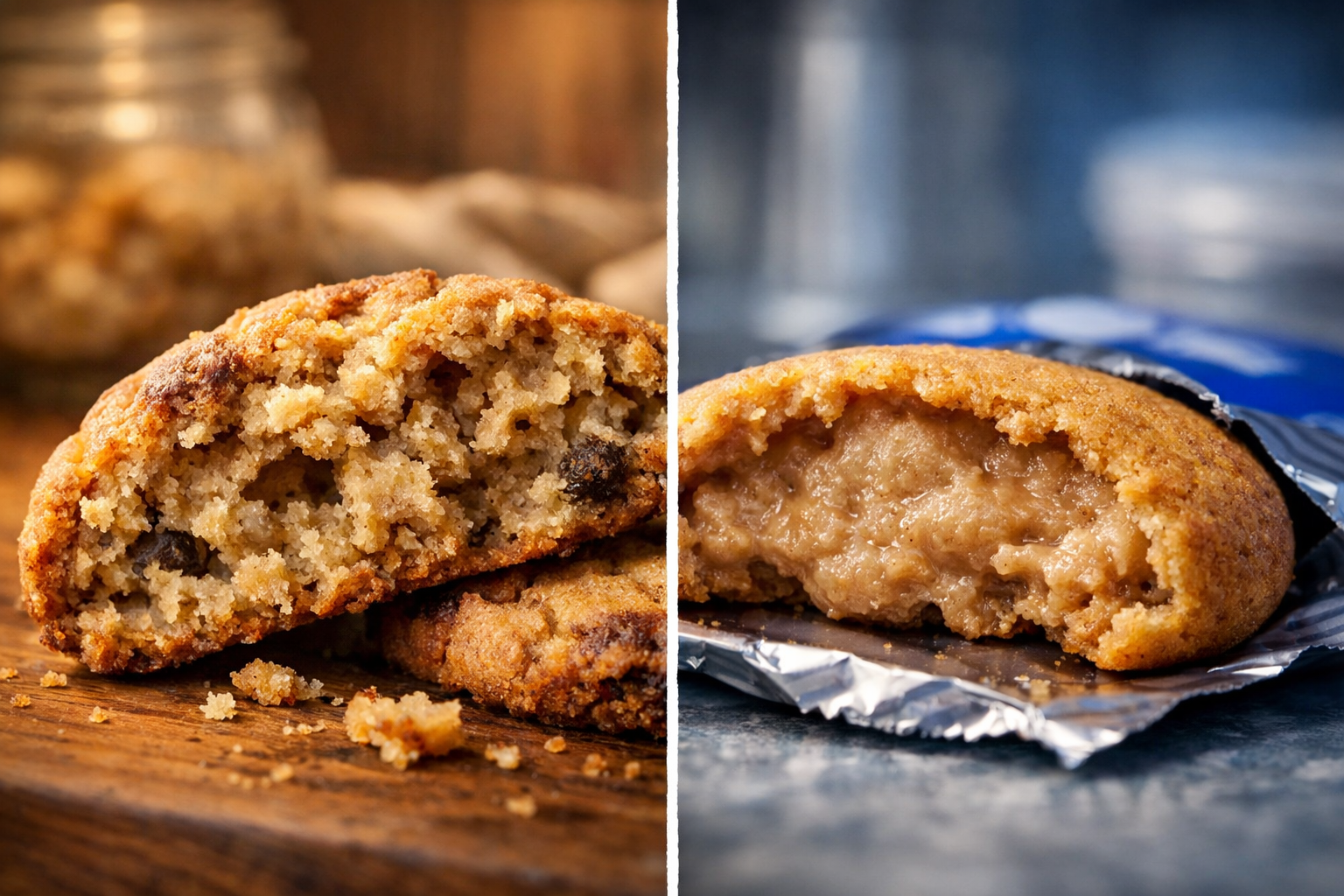
The Texture Gap: Why Homemade Food Feels Different Than Packaged Food
SUBSCRIBE TO OUR BLOG
Promotions, new products, and recipes.
You bite into something that should feel comforting.
Bread, maybe.
A cookie.
Something soft and familiar.
The taste is there. Nothing is wrong with it exactly. Sweetness arrives where it should. Salt appears in the background. The flavor is recognizable.
But the experience ends almost as quickly as it begins. You chew twice, maybe three times. And it’s gone, dissolved, collapsed, finished before you quite registered what happened. The mouth expected a small journey. Instead, it received a shortcut.
Later that evening you eat something similar at home. Not the same food necessarily, just something baked, mixed, or assembled in a kitchen rather than opened from a wrapper.
The flavor may actually be less precise. Less uniform. Maybe slightly uneven. But the eating feels different.
You chew longer without thinking about it.
The food pushes back slightly.
Your teeth have something to do.
And somewhere in the middle of chewing. Something subtle happens: the food starts to feel satisfying before you have even swallowed it.
Not because the flavor improved. Because the texture lasted.
Most people assume the difference between homemade food and packaged food is about ingredients. Fresh versus processed. Natural versus artificial. Simple versus complicated.
That explanation feels intuitive, but it doesn’t fully describe the sensation people notice when they compare the two. The real difference often appears earlier in the experience before taste has finished unfolding.
It appears in the structure of the bite.
Homemade food tends to have a texture that changes while you chew. Packaged food tends to have a texture that collapses quickly and predictably. You might not consciously notice this happening, but your mouth does.
And once you start noticing it, it becomes difficult to ignore.
Think about chewing something baked in a home kitchen.
At first, the surface resists slightly. Not hard resistance, just enough for your teeth to engage with it. The interior compresses. Some parts soften faster than others. Air pockets shift. Moist sections spread.
The food moves through several small stages.
Firm. Soft. Almost dissolved.
Each chew reveals a slightly different arrangement. Your mouth stays involved because the structure keeps evolving. Now compare that to many packaged foods.
The first bite feels soft, sometimes even softer than the homemade version. Pleasantly soft, in fact. But the softness behaves differently. Instead of slowly yielding, it gives way all at once.
The structure collapses quickly, becoming paste-like within a few chews. The food no longer needs much mechanical work. Chewing becomes optional. The experience finishes early.
The flavor might linger, but the physical engagement is already over. That difference, small, quiet, easy to overlook, is what some people begin to notice as the texture gap.
Texture does more than make food feel interesting. It also regulates how long the mouth interacts with it. The human mouth is built to gather information during chewing.
Teeth break structure apart. Saliva spreads flavor molecules. Pressure receptors measure resistance. The tongue moves pieces across different surfaces.
This process doesn’t just help you eat. It helps you experience eating. When food holds its structure for a little while, the mouth stays busy. Signals accumulate gradually. The brain receives a steady stream of sensory updates: pressure, movement, breakdown, release.
The eating experience unfolds over time. But when food loses its structure immediately, many of those signals compress into a shorter window.
The mouth receives the flavor, but the physical conversation ends early. You swallow before the experience has really developed. Packaged foods often prioritize predictability.
Predictable texture travels better through machines. It survives transportation. It remains stable on shelves for long periods. It behaves the same in every batch.
To achieve that consistency, the internal structure of the food is often designed to be uniform and easily compressible.
Uniform structures break down quickly. Not because something is “wrong,” but because they are built to behave reliably under pressure.
Homemade food is rarely perfectly uniform. Small variations appear everywhere. Some parts bake slightly longer. Air pockets form irregularly. Moisture distributes unevenly.
These tiny inconsistencies create micro-structures, small differences in density and resistance inside each bite.
When you chew, those differences reveal themselves gradually. The food breaks apart in stages rather than all at once. Your mouth stays engaged.
People often describe this difference in emotional terms. They say homemade food feels heartier, or more filling, or more real. But those words are trying to capture a physical experience rather than a nutritional one.
What they’re noticing is structural duration.
Food scientists sometimes describe this difference using terms like fracture mechanics and oral processing time. These ideas describe how food structures break apart under pressure from teeth and how long a food maintains resistance during chewing. Foods with more varied internal structure tend to fracture gradually, releasing flavor and texture in stages. Foods with highly uniform structures tend to compress and dissolve more quickly. The mouth experiences these two behaviors very differently, even when the ingredients are similar.
How long the food remains structurally interesting to chew.
How long it occupies the mouth before disappearing.
If the structure vanishes too quickly, the brain interprets the experience as brief even if the flavor itself was strong. A short physical experience can leave a strange afterthought: the sense that you ate something yet somehow didn’t fully experience eating it.
Once the idea appears, it becomes hard to miss. The difference shows up in small moments. You finish a packaged snack and immediately reach for another without quite meaning to.
Not because you’re especially hungry. Just because the first one ended so quickly.
Your mouth remembers starting the experience but not fully completing it. Homemade food tends to linger longer in memory for a simple reason: the chewing lasted longer.
Your brain had more time to register what was happening. More time to feel the structure change. More time to experience the small mechanics of eating.
None of this requires anyone to prefer one type of food over another. The observation is quieter than that. It’s simply that the mouth expects a certain timeline when it eats. A beginning, a middle, and an end.
Homemade food often stretches that timeline slightly. Packaged food often compresses it. Both can taste good. Both can be enjoyable. But they feel different because the journey through each bite unfolds differently.
One takes a few more steps. The other reaches the finish line almost immediately. And once you notice how quickly some foods disappear while others stay with you just a little longer, eating starts to feel less like a single moment.
And more like a short sequence your mouth quietly performs every time you take a bite.
The Science of Satiety & Structure
Master the hidden physics and chemistry of your kitchen with Ed McCormick.
- → Meet the Expert: About Ed McCormick
- Part 1: Why Some Foods Never Feel Filling
- Part 2: Silent Architects: Texture, Structure, and Satiety
- Part 3: Why Food Tastes Fine But Feels Wrong
- Part 4: Mouthfeel: Brain vs. Tongue Satisfaction
- Part 5: The Hidden Role of Structure in Blood Sugar Spikes and Crashes
- Part 6: Why Ultra Processed Foods Feel Hollow
- Part 7: How Modern Food Lost Its Natural Stop Signals

|
About the Author Ed is the founder of Cape Crystal Brands, editor of the Beginner’s Guide to Hydrocolloids, and a passionate advocate for making food science accessible to all. Discover premium ingredients, expert resources, and free formulation tools at capecrystalbrands.com/tools. — Ed |
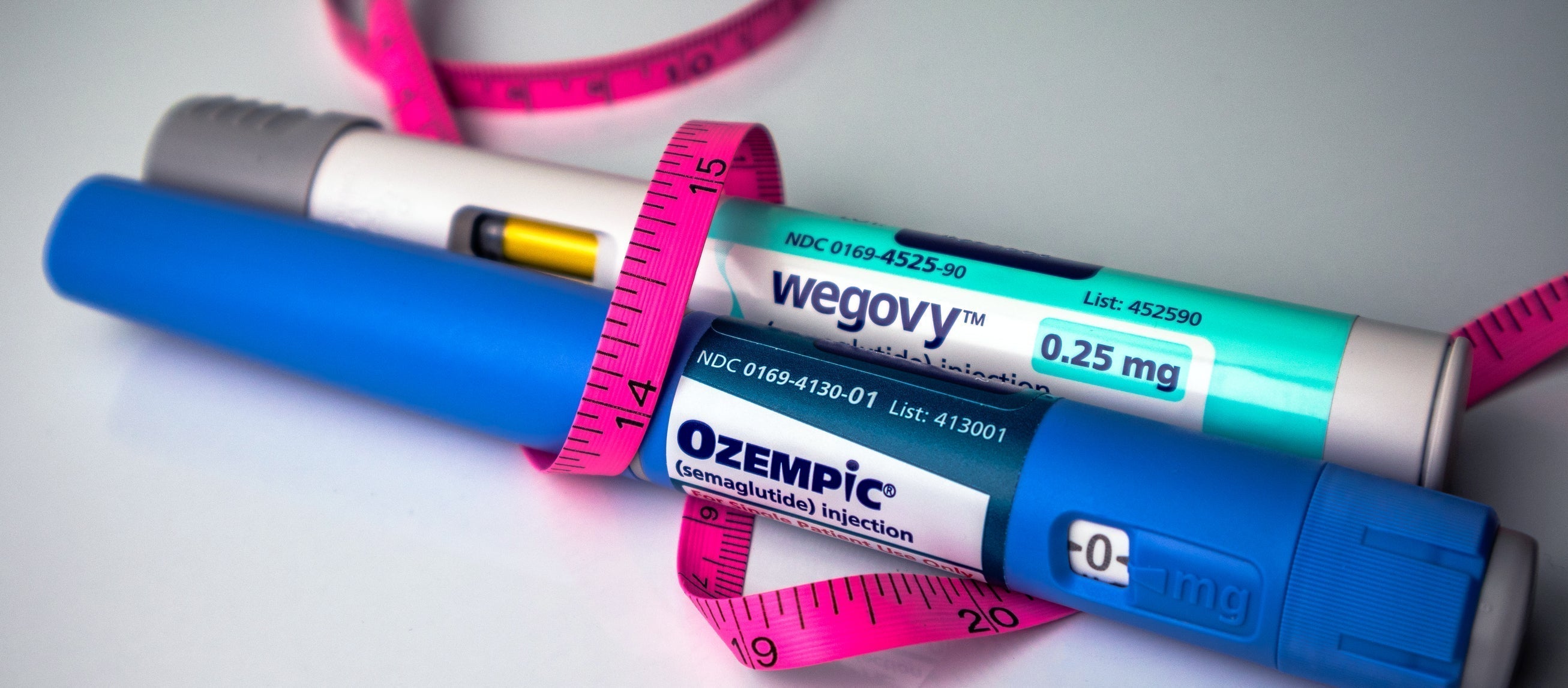
How GLP-1 Drugs Are Forcing Food Reformulation — And Why Texture Science Will Decide the Winners

The Hidden Role of Structure in Blood Sugar Spikes and Crashes

What “Mouthfeel” Really Means, and Why Your Brain Cares More Than Your Tongue
Enjoyed this post? Subscribe to The Crystal Scoop
Food-science tips, ingredient know-how, and recipes. No spam—unsubscribe anytime.
- Choosing a selection results in a full page refresh.