
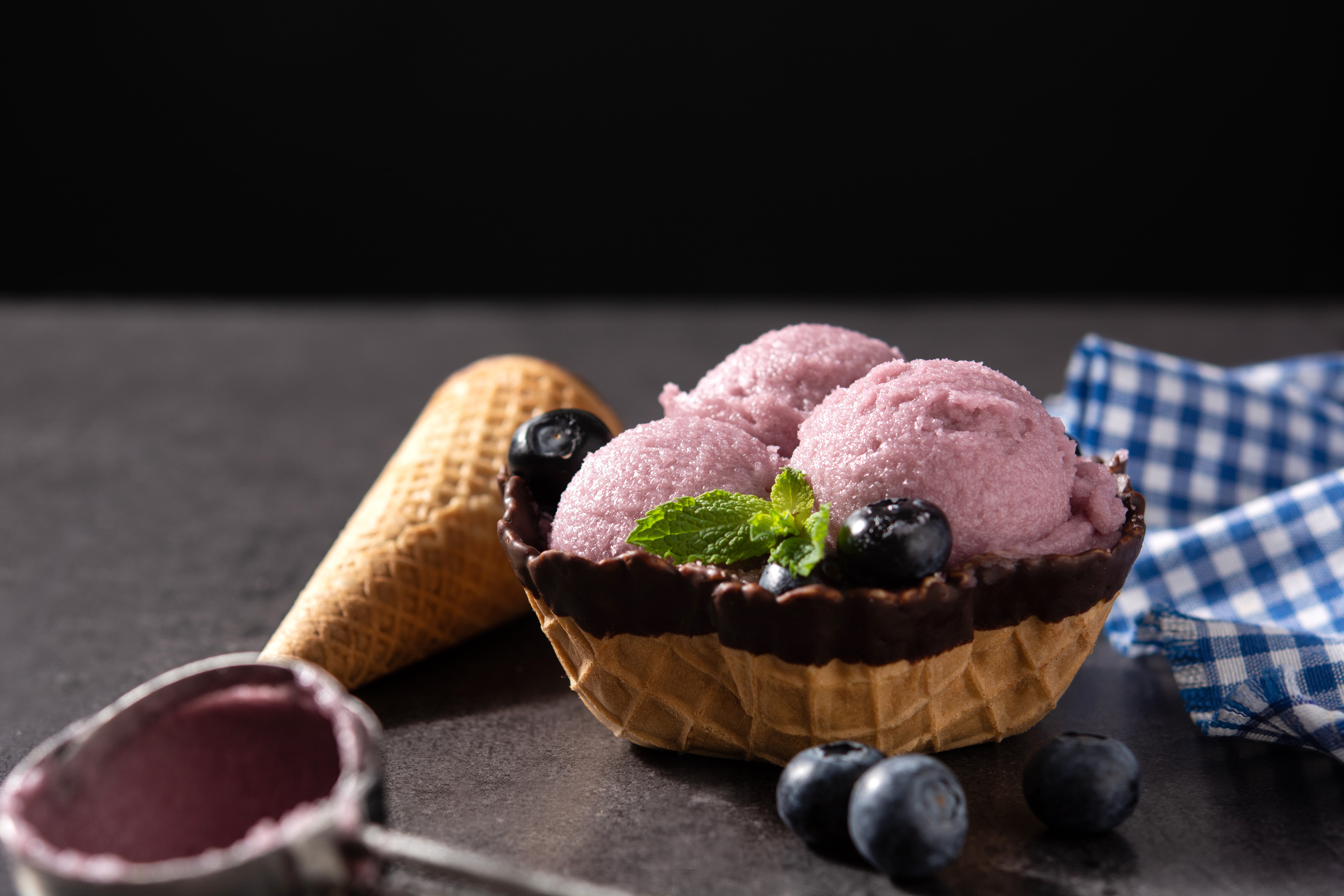
Why Does Homemade Sorbet Become Icy? How to Create a Smoother Texture
SUBSCRIBE TO OUR BLOG
Promotions, new products, and recipes.
Key Takeaways
-
Icy sorbet usually comes down to too much water, too little sugar, or slow freezing — all of which let large ice crystals form.
-
A homemade sorbet recipe needs the right sugar-to-water ratio to lower its sorbet freezing point and keep texture soft.
-
A hydrocolloid stabilizer for sorbet, such as locust bean gum for sorbet or tara gum for sorbet, binds excess water so it can’t form large ice crystals.
-
Proper churning, tempering, and storage are just as important as your recipe if you want smooth sorbet every time.
If you’ve ever pulled a batch of homemade sorbet out of the freezer only to find it rock-hard and gritty, you’re not alone. That homemade sorbet too icy problem is one of the most common frustrations home cooks run into.
It’s usually not a flaw in your recipe’s flavor. Instead, it’s a sorbet texture problem rooted in food science.
Sorbet is mostly water, and how that water freezes determines everything. Freeze it right, and you get a silky, scoopable dessert. Get it wrong, though, and you’re left with an icy block that fights back against your spoon.
The good news is that you can still make smooth sorbet, even when you’re working with watery fruit. It just comes down to knowing what causes those ice crystals to form in the first place.
So, how do you keep them from taking over? Keep reading to learn how to prevent ice crystals in sorbet, what helps create a smoother sorbet texture, and how a small amount of sorbet stabilizer can help.
Table of Contents
-
The Science Behind Icy Sorbet
-
Understanding Sorbet’s Freezing Point
-
How Do You Make Sorbet Smooth? (Step-by-Step)
-
Best Stabilizers for Smooth, Creamy Sorbet
-
Tips to Keep Sorbet Soft in the Freezer
-
FAQs
-
Smoother Sorbet Starts Now
The Science Behind Icy Sorbet

Sorbet is essentially a sweetened fruit purée that’s partially frozen. When water freezes, it forms ice crystals.
The size of those crystals is what your tongue actually perceives as “icy” or “smooth”. Small, evenly distributed crystals (ideally under 50 microns) feel creamy, while large crystals feel gritty and coarse.
Water Content and Sugar Ratio’s Role
Fruit purées are naturally high in water, and water is the enemy of smooth texture unless it’s managed correctly. Dissolved sugar interferes with how water molecules bond together as they freeze, which limits crystal size.
As one food science resource explains, dissolving a solute like sugar into water lowers its freezing point, a phenomenon called freezing point depression. This is why a sorbet recipe with too little sugar almost always turns out icy.
Food writers have noted that swapping in a sugar with a simpler molecular structure, like the glucose in corn syrup, helps water molecules bind together instead of forming ice crystals. That’s one reason professional sorbet recipes rarely rely on plain table sugar alone.
Churning Speed and Freezing Rate
How fast your sorbet base freezes matters as much as what's in it. Slow freezing gives water molecules time to link up into large crystals, while fast freezing (as in an ice cream maker) locks them in place while they’re still small.
Storage matters just as much. Food writers point out that keeping sorbet in an airtight container helps prevent ice crystals from forming after the fact, so the smooth sorbet texture you worked for in the freezer doesn’t disappear in storage.

Understanding Sorbet’s Freezing Point
Pure water freezes at 32°F, but sorbet doesn’t — and it shouldn’t. Dissolved sugars and, in some recipes, a splash of alcohol lower the sorbet freezing point of the mixture.
This is what keeps sorbet soft enough to scoop straight from the freezer instead of needing a chisel.
Factors that affect your sorbet freezing point:
-
Sugar concentration – More dissolved sugar means a lower freezing point.
-
Sugar type – Invert sugar and glucose depress the freezing point more effectively than plain table sugar (sucrose).
-
Alcohol content – Even a tablespoon of vodka or liqueur can noticeably soften texture, though too much will prevent freezing altogether.
-
Fruit water content – Watery fruits like watermelon need a higher sugar ratio than denser fruits like mango.
How Do You Make Sorbet Smooth? (Step-by-Step)

-
Balance your sugar ratio. Aim for roughly 25–30% sugar content in your base — enough to depress the freezing point without making the sorbet overly sweet.
-
Add a stabilizer. Whisk a small amount of a hydrocolloid stabilizer (more on this below) into your purée before chilling.
-
Chill the base fully. Refrigerate your mixture for at least 4 hours, or overnight, before churning — a cold base freezes faster and more evenly.
-
Churn in an ice cream maker. This is the fastest way to freeze the mixture quickly enough to keep crystals small.
-
Temper before freezing solid. Transfer to an airtight container and freeze with a layer of plastic wrap pressed directly onto the surface to limit air exposure.
-
Store at a consistent temperature. Avoid opening and closing the freezer repeatedly, which causes temperature swings and recrystallization.
Best Stabilizers for Smooth, Creamy Sorbet
Not all sorbets require a stabilizer, although in cases where yours is constantly becoming icy regardless of what you add, this is where the fix resides. The ingredients that achieve this task belong to a group called hydrocolloids.
A hydrocolloid stabilizer for sorbet is a plant-based compound that binds water molecules, and as such, they do not move and refreeze into large ice crystals.
Researchers in food science observe that hydrocolloids can be used to control the texture and rheology of food systems at concentrations as low as 1%. That is why only a little pinch is needed to change a homemade batch.
Locust Bean Gum for Sorbet
Locust bean gum for sorbet (LBG) is a go-to sorbet stabilizer because it binds water efficiently at very low usage rates. It also holds up well through freeze-thaw cycles, which helps if your sorbet sits in the freezer for more than a few days.
It’s often paired with kappa carrageenan for an even more resilient texture. If you want to try it yourself, Cape Crystal Brands’ Locust Bean Gum (Carob Gum) is food-grade and dissolves easily into chilled purées.

Tara Gum for Sorbet
Tara gum for sorbet works similarly to locust bean gum but performs especially well in acidic, citrus-forward sorbets where LBG can sometimes underperform. It creates a glossy, smooth mouthfeel without the slightly stretchy quality LBG can produce.
Browse our Tara Gum Powder if you’re working with lemon, lime, or other high-acid fruits.

For a deeper dive into how these ingredients work across recipes, check out our guide on hydrocolloids explained, or use our hydrocolloid selector tool to find the right match for your next batch of creamy sorbet.

Tips to Keep Sorbet Soft in the Freezer

-
Work in a shallow airtight container, not a deep one - it freezes more uniformly.
-
Add 1/2 spoonful of alcohol (vodka, rum, or some fruit liqueur) to reduce the freezing point with minimal change of flavor.
-
Plastic wrap can be placed on the surface and sealed to avoid the development of ice crystals on top.
-
Portion sorbet into smaller containers so you’re not repeatedly exposing the whole batch to warm air.
-
Allow to stand at room temperature for 5-10 minutes before scooping, to achieve the smoothest consistency.
FAQs
1. Why does homemade sorbet become icy?
Homemade sorbet becomes icy when there isn’t enough dissolved sugar to lower the freezing point, or when the base freezes too slowly, allowing large ice crystals to form.
2. How do you make sorbet smooth?
Balance your sugar ratio, add a hydrocolloid stabilizer, chill the base thoroughly, and churn it quickly in an ice cream maker rather than freezing it still.
3. How do you prevent ice crystals in sorbet?
Control sugar concentration, freeze the base rapidly, use a stabilizer to bind water, and store sorbet at a steady, cold temperature.
4. What stabilizer is used in sorbet?
Common sorbet stabilizers include locust bean gum, tara gum, and guar gum — all hydrocolloids that bind water and limit ice crystal growth.
5. Can locust bean gum improve sorbet texture?
Yes. Locust bean gum binds excess water at very low usage rates, producing a creamier texture that holds up well even after repeated freeze-thaw cycles.
6. Can tara gum be used in sorbet?
Yes, tara gum works especially well in citrus and acidic fruit sorbets, giving a smooth, glossy texture without the slight elasticity locust bean gum can add.
7. Why does sorbet become hard in the freezer?
Sorbet hardens in the freezer when temperature fluctuations cause existing ice crystals to grow larger over time, a process known as recrystallization.
8. How can you make homemade sorbet softer?
Add more sugar or a splash of alcohol to lower the sorbet freezing point, incorporate a sorbet stabilizer, and store homemade sorbet in a shallow, airtight container at a consistent temperature.
Smoother Sorbet Starts Now
Icy sorbet isn’t a flaw in your cooking. It’s a solvable sorbet texture problem rooted in freezing science.
By balancing your sugar ratio, churning quickly, and adding a small amount of stabilizer like locust bean gum for sorbet or tara gum for sorbet, you can get consistently smooth sorbet every time. Small adjustments make a noticeable difference, so the next batch you pull from the freezer can taste and feel just as good as it looks.
Ready to put this into practice?
Shop food-grade stabilizers from Cape Crystal Brands and give your next batch of sorbet the smooth, scoopable texture it deserves.

|
About the Author Ed is the founder of Cape Crystal Brands, editor of the Beginner’s Guide to Hydrocolloids, and a passionate advocate for making food science accessible to all. Discover premium ingredients, expert resources, and free formulation tools at capecrystalbrands.com/tools. — Ed |

How Modern Food Lost Its Natural Stop Signals

What’s Really in Your Food? The Ingredient No One Talks About

Why Ultra Processed Foods Feel Hollow, Not Just Unhealthy
Enjoyed this post? Subscribe to The Crystal Scoop
Food-science tips, ingredient know-how, and recipes. No spam—unsubscribe anytime.
- Choosing a selection results in a full page refresh.