
Is Sodium Alginate Safe to Eat? What Food Scientists Want You to Know
SUBSCRIBE TO OUR BLOG
Promotions, new products, and recipes.
TL;DR: Sodium alginate is a naturally derived ingredient from brown seaweed that food scientists consider safe when consumed in typical dietary amounts. It’s widely used to improve texture and stability in foods, medicines, and personal care products, with side effects being rare and usually mild. For most people, sodium alginate fits comfortably into a balanced diet when used as intended.
Sodium alginate is one of those ingredients that most of us will have consumed many times before without really noticing what it is. The name is unlikely to be familiar. This raises a number of curious questions. Is it safe? Why is it so widely found as a component of food? What is the truth about its health implications?
The quick answer: Sodium alginate has been deemed safe for consumption at typical dietary levels for the vast majority of individuals. We can now break down what sodium alginate is, how it’s produced, what makes food researchers utilize the compound so frequently, and when being conscious about consumption becomes important.
What Is Sodium Alginate?
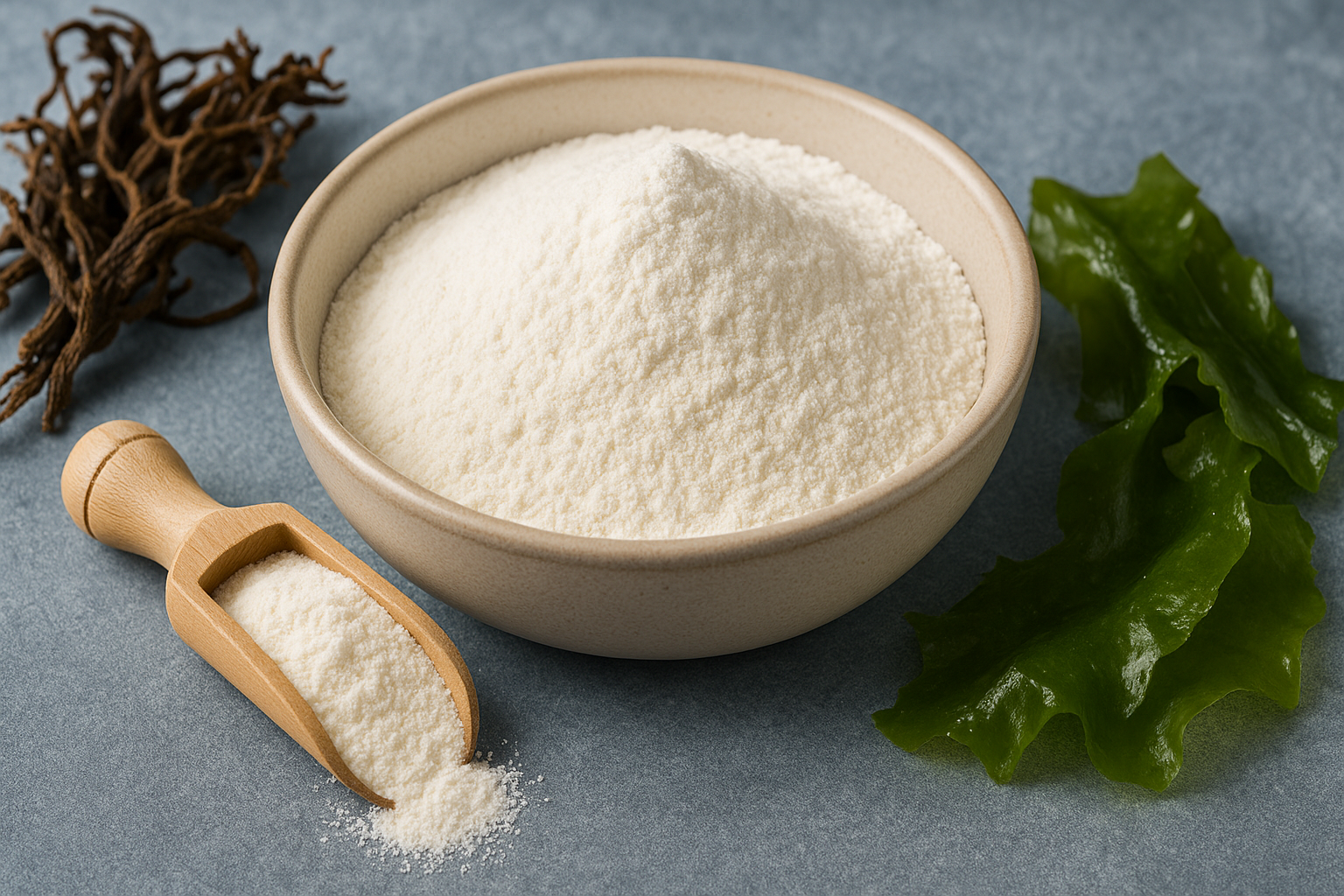
Sodium Alginate is a naturally derived carbohydrate sourced from brown seaweed. In terms of food science, Sodium Alginate falls under a category of ingredients that are termed "hydrocolloids," compounds that interact with water to create a gel-like effect or stabilize mixtures.
Sodium Alginate’s unique character involves its ability to gel and thicken without the use of heat, making it an ideal component in the food industry to provide stable textures to foods without affecting their freshness or nutritional value. This substance does not have any odor or taste and functions at a very low concentration.
How Is Sodium Alginate Made?
Sodium Alginate is obtained from brown algae that is extracted, dried, and processed. The sodium alginate is isolated using an alkaline solution, and then purified, filtered, and dried into a fine powder.
Processing conditions can be varied to affect gelation strength, viscosity, and properties, making it possible to choose the right alginate variety depending on the end use, be it in the form of ice cream, capsules, or wound care preparations.
What Is Sodium Alginate Used For?
Primarily, sodium alginate is a functional ingredient, not a nutritional one. Sodium alginate serves the functions of:
• Thicken liquids
• Emulsion stabilizers
• Produce soft elastic gels
• Enhance Texture and Consistency
Being effective in chilled systems and needing only a small quantity, it is preferred to the heat-activated thickener in most food applications today.
Sodium Alginate: Role in Food and Industry
Sodium Alginate in Food Products
In the culinary world, sodium alginate is known to enhance the texture, stability, and shelf life of dishes. The ingredient is usually found in frozen desserts, dairy products, sauces, baked goods, and plant-based alternatives where it is used to replicate the original texture.
Sodium Alginate in Industrial Applications
However, aside from food applications, sodium alginate is also used in making medical dressings, dental impressions, pharmaceutical products, textiles, and bioprinting. Such diverse applications indicate that the compound is safe and reliable.
Most Common Sodium Alginate Applications
Sodium alginate can be obtained either as food-grade material and non-food grade. Food grade must be highly purified, whereas the other grades are suited for their intended applications.
This is significant because food safety is no longer just the purview of the ingredient, but also the quality of the ingredient.
Sodium Alginate in Food Products
Sodium alginate occurs in:
Ice cream and frozen dessert as it prevents ice crystal formation
• Plant-based meat and dairy products
• Sauces, dressings, and emulsions
• Baked goods and restructured foods
For consumers, the important thing is that sodium alginate is used in very tiny quantities and has been safely consumed in foods for a long time.
Sodium Alginate in Medicine
In medical and pharmaceutical applications, sodium alginate is used in:
• Antacids that create a gastric barrier
• Fluid-absorbing and healing wound dressings
• Capsules, tablets, and gels
Its application within the body for health reasons adds credence to the fact that it is safe for use when applied appropriately.
Sodium Alginate in Cosmetics
Sodium Alginate functions as a stabilizer and thickening agent in personal care applications such as creams, lotions, toothpaste, and hair care products. Its role in these applications is driven by its gentleness, non-toxicity, and ease of biodegradability.
Allergies and Sensitivities Related to Sodium Alginate
While occurrences of actual allergic reactions to sodium alginate are rare, mild sensitization can occur. In some cases, bloating and/or gastrointestinal discomfort may be encountered, especially among those with a delicate gastrointestinal system.
Those who have known sensitivities must check labels carefully because sodium alginate can be found under a number of names including ‘alginate,’ ‘algin,’ or ‘E401.’
Potential Gastrointestinal Side Effects
In some people, Sodium Alginate may cause:
• Bloating or Gas
• Changing patterns of bowel movements
• Mild abdominal discomfort
Such side effects can be ascribed to its fiberlike properties exhibited by it in the intestinal tract.
Interactions with Medications and Nutrient Absorption
Binding with Medications
Sodium alginate can bind some drugs in the gastrointestinal tract. Such drugs may include some antibiotics and thyroid drugs when co-administered.
Impacting Nutrient Absorption
There is very little evidence to support a binding of alginate to small amounts of minerals or fat-soluble vitamins, although this would be of minimal significance to human nutrition.
Thickening and Delayed Gastric Emptying
It has the ability to form a gel can slow the emptying of food from the stomach, contributing to an increased sense of satiety but perhaps necessitating caution when taking medications.
Sodium Alginate in the Context of a Balanced Diet
Nutritional Contribution
Sodium Alginate does not contain any vitamins or minerals and is relatively inert.
Fiber-Like Benefits
As this is a nondigested ingredient, it could be a source of bulk and could help ensure regular digestion.
Caloric Influence
It is a non-digestible carbohydrate and has very low caloric value.
Role in Weight Management and Satiety
Some studies have reported the potential for alginate-containing foods to stimulate satiety by promoting feelings of fullness
Sodium Intake Considerations
Although sodium alginate does have sodium, its effect is insignificant in a typical food context. The sodium intake, not the intake of sodium alginate, is the most relevant point.
Demand for Sodium Alginate Is Growing
Sodium alginate keeps demanding because of the following reasons:
• Preference for biodegradable and natural ingredients
• replacement of synthetic stabilizers
Because of its versatility and safety for consumption, it has become an essential ingredient in modern food formulation.
The demand for sodium alginate is increasing due to:
• The plant-based market and clean-label trend
• Desire for Biodegradable & Natural Ingredients
• Replacement of synthetic stabilizers
Due to its versatility and safety for consumption, it is a commonly used ingredient in food formulation.
Frequently Asked Questions
Can sodium alginate be considered a prebiotic?
It behaves like fiber but is not classified as a true prebiotic.
Does sodium alginate affect people with iodine sensitivity?
It contains negligible iodine and is generally not a concern.
How does sodium alginate affect people with GERD?
It may be beneficial, as alginate-based antacids form protective barriers.
Is sodium alginate safe for gluten intolerance or celiac disease?
Yes. Sodium alginate is naturally gluten-free.

|
About the Author Ed is the founder of Cape Crystal Brands, editor of the Beginner’s Guide to Hydrocolloids, and a passionate advocate for making food science accessible to all. Discover premium ingredients, expert resources, and free formulation tools at capecrystalbrands.com/tools. — Ed |

Hydrocolloids Explained: Food Gums, Gels and Texture

How Many Grams Are in a Teaspoon? Powder Conversion Guide for 30+ Ingredients

How Modern Food Lost Its Natural Stop Signals
Enjoyed this post? Subscribe to The Crystal Scoop
Food-science tips, ingredient know-how, and recipes. No spam—unsubscribe anytime.
- Choosing a selection results in a full page refresh.