Hydrocolloid Rules of Thumb: Ratios, Mistakes & Fixes Chefs Use
Hydrocolloid Rules

Hydrocolloid Rules of Thumb: Ratios, Mistakes & Fixes Chefs Use

SUBSCRIBE TO OUR BLOG

Promotions, new products, and recipes.

Updated January 24, 2026

Quick Answer

Hydrocolloids reward restraint. Most failures come from overdosing, poor hydration, or choosing the wrong ingredient for the job. These rules of thumb summarize what chefs and formulators actually rely on when working fast.

Hydrocolloids don’t behave like flour or starch. They act fast, amplify small errors, and behave differently depending on heat, shear, and hydration order.

Use these rules when you don’t have time for theory—and need something to work on the first or second try.

Dosing Rules

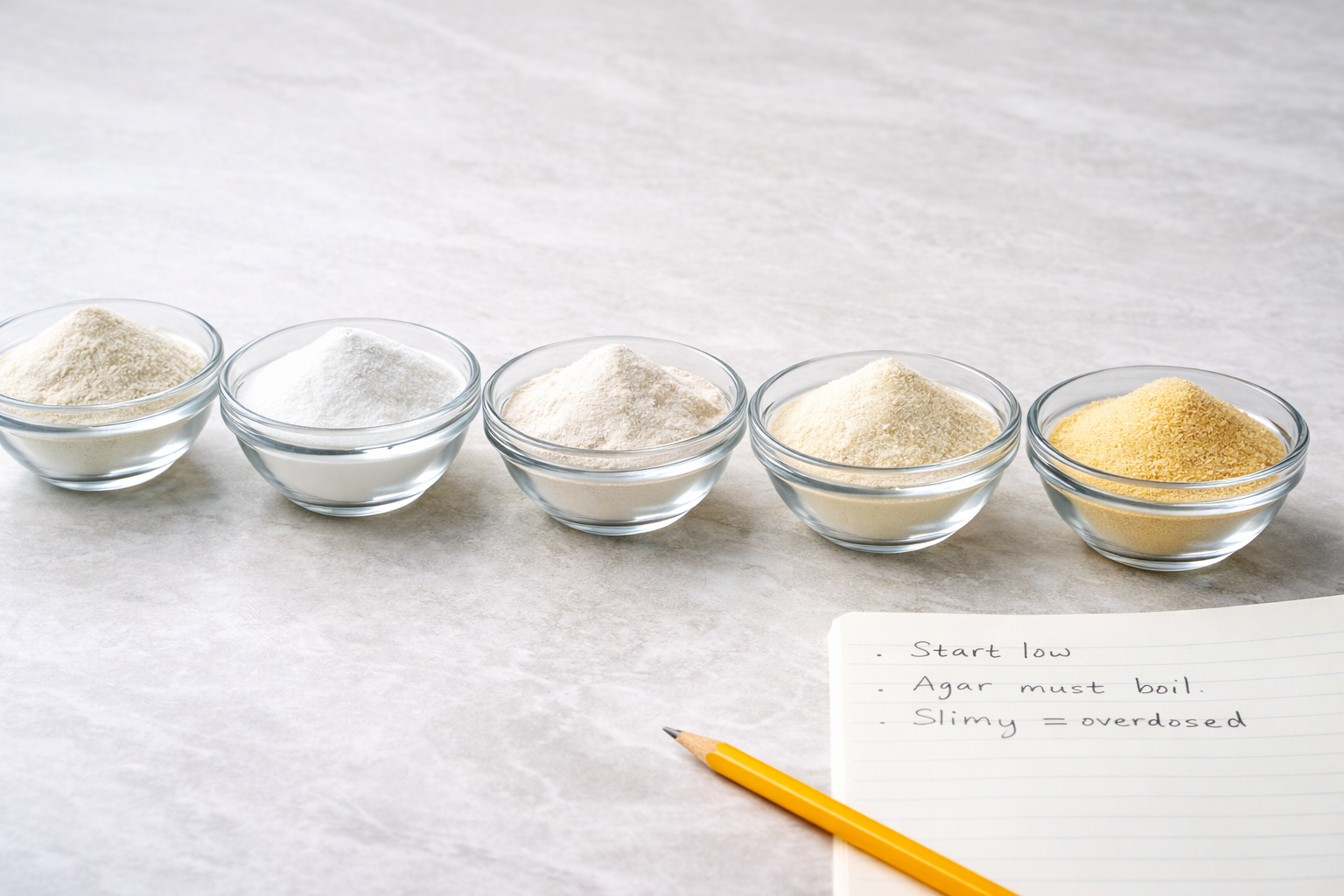
Start lower than you think. Most hydrocolloids work between 0.05–0.30%. Overshooting is far more common than undershooting.
Gels ≠ thickeners. Xanthan thickens but does not gel. Agar and gelatin gel but feel wrong in sauces.
Percent beats spoons. If consistency matters across batches, dose by percentage, not teaspoons.

Hydration Rules

Never dump powders straight into water. Pre-mix with sugar or salt, disperse in oil, or blend aggressively.
Agar must boil. If it didn’t reach a boil, it didn’t activate—no exceptions.
Give it time. Many hydrocolloids finish hydrating after a few minutes. Don’t judge too early.

Texture Rules

Slimy = overdosed. If it stretches or feels snotty, reduce the hydrocolloid before changing anything else.
Elastic vs rigid matters. Gelatin and pectin feel elastic. Agar and gellan feel rigid.
Clarity is a clue. Clear but thin often means underdosed. Opaque and gummy usually means too much.

Heat & Stability Rules

If it must hold hot, avoid gelatin. Gelatin melts near body temperature.
If it must melt in the mouth, avoid agar. Agar stays solid well above room temperature.
Freeze-thaw is unforgiving. Guar and locust bean gum outperform many others in frozen systems.

Pairing Rules

One hydrocolloid rarely does everything. Blends are used to balance elasticity, body, and stability.
Xanthan adds control; others add feel. Use xanthan to stabilize, then soften texture with another gum if needed.

Rules for Avoiding Common Failures

If it tastes fine but feels wrong, it’s a texture issue—not flavor.
If you doubled the dose and it got worse, stop. You’re solving the wrong problem.
If substitution feels “almost right,” it usually isn’t. Function matters more than weight.
Ed - Cape Crystal Brands

About the Author

Ed is the founder of Cape Crystal Brands, editor of the Beginner’s Guide to Hydrocolloids, and a passionate advocate for making food science accessible to all. Discover premium ingredients, expert resources, and free formulation tools at capecrystalbrands.com/tools.

— Ed

📚 View the complete index of our blog posts

Related Posts

Hydrocolloid Substitution Table: Replacing Xanthan, Guar, Agar & More
Updated January 24, 2026 Quick Answer Hydrocolloids are not interchangeable 1:1. This substitution table shows what y...
More Info
Agar Agar vs Gelatin Conversion Table: Strength, Texture & Heat Differences
Updated January 24, 2026 Quick Answer Agar agar and gelatin are not 1:1 substitutes. Agar forms firmer, more brittle ...
More Info
Xanthan Gum Conversion Table: Exact Ratios for Sauces, Baking & Drinks
  Updated January 24, 2026 Quick Answer This xanthan gum conversion table shows teaspoon and tablespoon weights in gr...
More Info

Leave a comment

Please note, comments need to be approved before they are published.

Enjoyed this post? Subscribe to The Crystal Scoop

Food-science tips, ingredient know-how, and recipes. No spam—unsubscribe anytime.

We’ll email 1–2×/month. Unsubscribe anytime.
Not sure which hydrocolloid to use? Try our Selector Tool!