
Trending searches
Trending searches
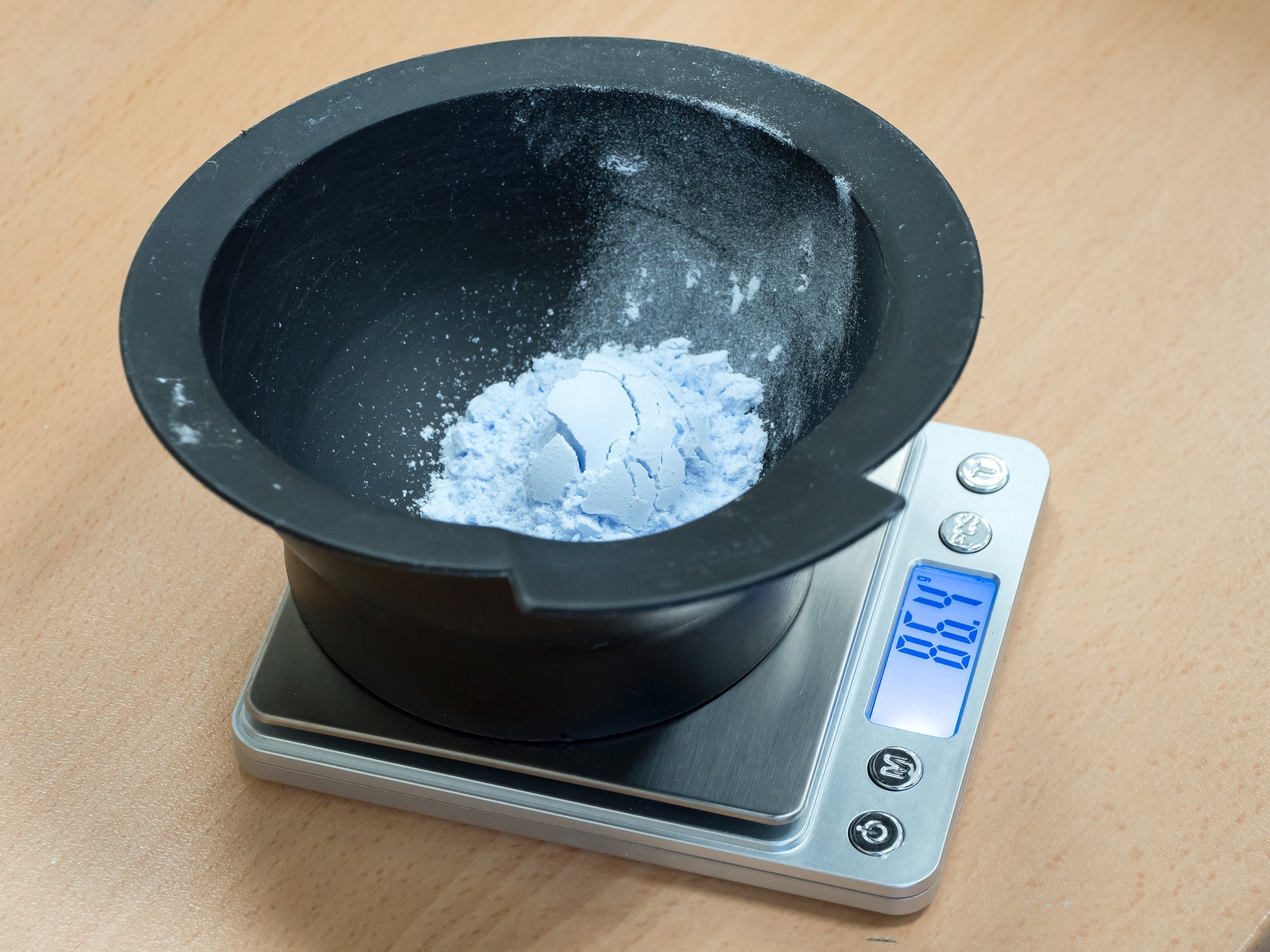
Xanthan Gum Conversion Table: Exact Ratios for Sauces, Baking & Drinks
SUBSCRIBE TO OUR BLOG
Promotions, new products, and recipes.
Updated January 24, 2026
Quick Answer
This xanthan gum conversion table shows teaspoon and tablespoon weights in grams, plus chef-usable dosage ranges for sauces, baking, and drinks. Xanthan is powerful—small overages can turn a recipe slimy or overly elastic, so grams are the safest way to repeat results.
Xanthan gum is one of the most useful “small dose, big impact” ingredients in modern cooking. It can stabilize emulsions, prevent separation, add cling to sauces, and improve gluten-free structure—often at fractions of a percent.
Below are (1) teaspoon/tablespoon-to-grams conversions and (2) practical dosage ranges by use case. If you want repeatable texture, weigh in grams—especially once you move beyond home-scale batches.
Xanthan Gum Conversion Table (tsp & tbsp to grams)
When to use: when a recipe gives spoons and you need a reliable gram target. Spoon weights vary by brand, grind, and humidity—grams are the safest repeatable reference.
| Measurement | Approx. grams |
|---|---|
| 1/8 tsp | 0.39 g |
| 1/4 tsp | 0.78 g |
| 1/2 tsp | 1.55 g |
| 1 tsp | 3.10 g |
| 1 tbsp | 9.30 g |
Note: These are practical kitchen averages. For professional repeatability, verify your own scoop weight once with a scale and keep that baseline.
- 0.10% = 1 g per 1,000 g
- 0.25% = 2.5 g per 1,000 g
- 0.50% = 5 g per 1,000 g
Xanthan Gum Dosage Chart (by use case)
When to use: when you want the “right feel” for the application. Xanthan isn’t one-number-fits-all—texture goals matter.
| Use case | Typical xanthan range | What it does |
|---|---|---|
| Salad dressings & vinaigrettes | 0.10% – 0.25% | Prevents separation, adds cling, stabilizes emulsions |
| Sauces & pan sauces | 0.05% – 0.20% | Light thickening without starch haze; improves “nappe” |
| Soups & broths (body, not “paste”) | 0.03% – 0.12% | Adds body and suspension with minimal viscosity |
| Smoothies & beverages (stabilize/suspend) | 0.05% – 0.15% | Suspends pulp/protein; reduces settling; improves mouthfeel |
| Gluten-free baking (structure + moisture) | 0.30% – 0.80% | Improves dough cohesion, reduces crumble, improves rise |
| Ice cream / frozen desserts | 0.10% – 0.30% | Reduces ice crystals, improves melt, stabilizes mix |
- Blend into sugar or salt first, then whisk into liquid, or
- Disperse into oil first (for dressings), or
- Use a blender for 15–30 seconds for smooth hydration.
Troubleshooting: Why xanthan turns slimy (and how to fix it)
When to use: when your sauce feels “snotty,” overly elastic, or strangely thick but not creamy.
| Problem | Most common cause | Fix |
|---|---|---|
| Slimy / elastic texture | Dosage too high (often >0.25% for sauces) | Dilute by adding more base, or remake at a lower % |
| Clumps / fish-eyes | Poured directly into water | Pre-mix with sugar/salt, disperse in oil, or blend |
| Thick but “hollow” mouthfeel | Using xanthan alone when a creamy body is needed | Pair with another thickener (e.g., guar/locust bean) or use a small amount of starch for body |
| Not thickening enough | Under-dosed or not fully hydrated | Increase slightly and blend; give 2–5 minutes to fully hydrate |
Frequently Asked Questions
How many grams are in 1 teaspoon of xanthan gum?
About 3.1 g per teaspoon (and about 9.3 g per tablespoon) as a practical kitchen average. For best repeatability, weigh once with your own brand and keep that number.
How much xanthan gum should I use in a salad dressing?
Start around 0.10% (1 g per 1,000 g) and move up toward 0.25% if you want more cling and stability.
Why does xanthan gum feel slimy?
It’s usually overdosed. For sauces and liquids, staying under about 0.20% often avoids the “elastic/slimy” texture—then adjust in small steps.
Do I need heat to activate xanthan gum?
No. Xanthan hydrates in cold liquids. The bigger issue is dispersion—avoid dumping it directly into water to prevent clumps.

|
About the Author Ed is the founder of Cape Crystal Brands, editor of the Beginner’s Guide to Hydrocolloids, and a passionate advocate for making food science accessible to all. Discover premium ingredients, expert resources, and free formulation tools at capecrystalbrands.com/tools. — Ed |
Related Posts

The Story Behind The Genuine Carroway Cookbook and Island Advice Journal
How Small Ingredient Choices Quietly Change Appetite, Digestion, and Satisfaction
When Clean Labels Still Produce Unsettling Food
Enjoyed this post? Subscribe to The Crystal Scoop
Food-science tips, ingredient know-how, and recipes. No spam—unsubscribe anytime.
- Choosing a selection results in a full page refresh.
POLICY PAGES
QUICK LINKS
ABOUT US
Cape Crystal Brands,
- 18 Bank St., Suite 1, Summit NJ 07901.
- Phone: +1 908-273-5600
- Email: info@capecrystalbrands.com
- Tax ID: 26-2477626000
- FDA Facility # 16980627550
- Kosher Certified by: OKosher.org
Country/region
© 2026, Cape Crystal Brands | Sitemap