
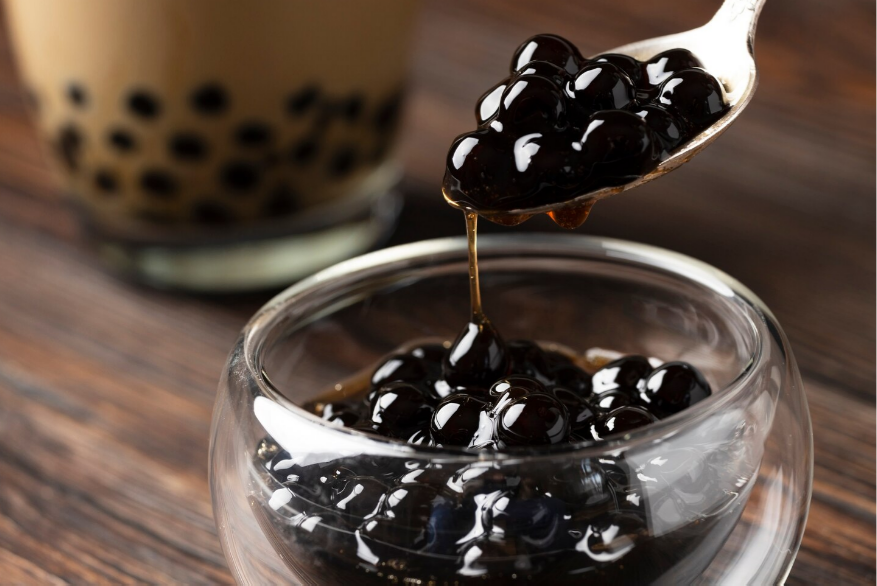
How To Make Homemade Boba Pearls: A Beginner's Guide
SUBSCRIBE TO OUR BLOG
Promotions, new products, and recipes.
Key Takeaways
-
Homemade boba pearls need just three core ingredients: tapioca starch, brown sugar, and water.
-
Simmer the pearls for 15 to 20 minutes, then let them rest covered for 15 more minutes to get a tender, springy center.
-
Keep cooked pearls warm and coated in brown sugar syrup, and skip the fridge, since cold temperatures harden them fast.
-
Serve cooked pearls within four to six hours, and freeze raw pearls for up to two months to enjoy fresh boba anytime.
Bubble tea shops charge a premium for those glossy, chewy spheres at the bottom of your cup, and after a few rounds of paying for them, you start to wonder if you can skip the intermediary. You can. With a few pantry staples and about an hour of hands-on time, you can make homemade boba pearls right in your own kitchen.
The process feels a lot like working with Play-Doh, which makes it surprisingly fun, and the payoff tastes far fresher than the bagged pearls you find in stores. Pearls cooked the same day have a soft, springy center that packaged versions rarely match, so your first sip will probably convince you to keep making them.
Here is a beginner's guide that walks you through every stage, from choosing ingredients and mixing the dough to cooking, sweetening, and storing your batch.
Table of Contents
-
What Goes Into Homemade Boba Pearls
-
Equipment and Prep Before You Start
-
The Full Method for Homemade Boba Pearls
-
Cooking Time and Technique
-
Getting a Chewy Texture
-
Starch Substitutes That Work
-
Storage and Shelf Life
-
Causes of Hard Pearls
-
Quick Troubleshooting Guide
-
Perfecting Homemade Boba Pearls One Batch at a Time
-
FAQs
What Goes Into Homemade Boba Pearls
Many beginners start by asking: what are boba pearls made of? The answer is refreshingly short. The old-fashioned way to make pearls is by mixing tapioca starch with brown sugar and hot water. The sugar will give the pearls a light caramel color and a slight sweetness, while the starch will give them their stretchy, elastic texture.
Tapioca is a starch derived from cassava roots and is also gluten-free. This means it can be very helpful if you avoid eating wheat products.
Here is the list of the ingredients for a small recipe that makes enough boba pearls for two to three servings:
-
½ cup tapioca starch, plus extra for dusting
-
¼ cup packed dark brown sugar
-
¼ cup water
-
A pinch of salt (optional)
For a thicker, glossier syrup, add a pinch of Xanthan Gum from Cape Crystal Brands. It helps the syrup coat every pearl.
After all your ingredients are gathered, the next question arises: how do you make homemade boba pearls? The brief instructions are the following: dissolve the sugar in the hot water, add the starch, knead the dough, shape it into strings, cut the pieces, and boil them. Below are more detailed instructions on each of these steps.

Equipment and Prep Before You Start
There is no need for specialty equipment; however, some tools will make the process easier. The saucepan will be used to make the sugar syrup. A large pot, at least 3 quarts, will give the pearls space during cooking. The silicone spatula, clean working area, bench scraper or knife, and slotted spoon complete the list.
You should sprinkle plenty of tapioca starch on your countertop before starting. The dough is very sticky when fresh, so adding additional starch will prevent it from sticking to your utensils and hands. You should keep the additional bowl with starch nearby so that you can add more when necessary.
You should prepare two bowls, one with cold water and another with brown sugar syrup, before starting to cook. It will allow you to proceed from one step to another without having to hurry.
The Full Method for Homemade Boba Pearls
Follow these steps in order. Each one builds on the last, so resist the urge to skip ahead.
-
Make the Sugar Syrup
In a small saucepan, combine the brown sugar, water, and salt. Cook it over medium heat until the sugar melts and begins to form tiny bubbles along its edges. Remove the pan from the stove just as it's about to boil.
-
Mix and Knead the Dough
Pour the hot syrup into the tapioca starch in a heat-proof bowl. Stir it using a spatula quickly. This dough will be lumpy and sticky. When it's cool enough to touch, knead it on your flour-coated surface for about 3 to 5 minutes.
The dough should have a smooth and soft consistency like modeling clay. Should the dough stick to your hands, add one teaspoon of starch; if the dough cracks, a couple of drops of warm water will help.
-
Roll and Cut the Pearls
Cut the dough into four parts. Roll each of them into a rope ¼ inch thick and then cut it into small pieces. Shape the pieces into balls in your palms. Dust the finished pearls with extra starch to prevent them from sticking together. Process the dough in portions and cover the remaining dough with a damp cloth.

Cooking Time and Technique
Cooking is where many first-timers stumble, so it helps to settle on what is the best way to cook homemade boba pearls. Use a large pot and plenty of water, roughly six cups for this batch. Bring the water to a rolling boil before you add the pearls. A hard boil keeps them from sticking to each other and the pot.
Add the pearls, stir gently, and wait for them to float to the surface. Then reduce the heat to medium and cook for 15-20 minutes, stirring occasionally. Turn off the heat source and cover the pot; let the pearls rest for another 15 minutes. This rest period will cook the pearls completely through.
Check the pearls' consistency using your teeth. Soft, springy pearls without a hard, dry center will be ready for the next stage of preparation. If the center is not yet soft, simmer the pearls for 5 more minutes and check.
Once the pearls are soft and springy, drain them and wash them with cold water. Transfer them directly into warm brown sugar syrup.
Getting a Chewy Texture
Beginners often wonder: how do you make boba pearls chewy? Three factors matter most: dough hydration, cooking time, and serving temperature.
Hydration is the top priority. Too little hydration gives you crumbly pearls. Too much hydration makes them go mushy. You should be looking for a dough that keeps its shape and is somewhat sticky.
Second comes timing. Undone pearls will have an uncooked core, while pearls that have been cooked for too long will no longer bounce back and start dissolving. The process we described above finds the optimal balance for most homes.
Finally, there is the serving temperature. Pearls should be served hot as soon as they’re done. As they cool down, the starch starts to tighten up, making them stiff.
|
Factor |
What happens if it's too low |
What happens if it's too high |
|
Dough moisture |
Dry, crumbly pearls |
Sticky, mushy pearls |
|
Cooking time |
Hard, chalky center |
Soft, falling apart |
|
Pearl size |
Cooks fast, less chewy |
Cooks slowly, risk of raw center |
|
Serving temperature |
Stiff, tough texture |
Soft but still pleasant |

Starch Substitutes That Work
Sometimes the pantry runs short. Beginners often ask: can you make boba pearls without tapioca starch? You can, though the results change. Tapioca delivers the classic bouncy chew, so substitutes bring their own personality.
The closest substitute is the starch from sweet potatoes, which gives a slightly firmer, stretchier pearl preferred by bubble tea lovers. However, potato starch can also be used, though the pearls will be softer and less elastic. Corn starch is the poorest option since the pearls produced from it are crumbly. Glutinous rice flour gives you a totally different dessert.
|
Starch |
Texture Result |
Ease for Beginners |
|
Tapioca starch |
Bouncy, glossy, classic chew |
Easy |
|
Sweet potato starch |
Firm and elastic |
Moderate |
|
Potato starch |
Soft and tender |
Moderate |
|
Cornstarch |
Pasty and crumbly |
Difficult |
|
Glutinous rice flour |
Soft and mochi-like |
Easy |
If you want authentic bubble tea results, stick with tapioca starch. For an experiment, try a half-and-half blend of tapioca and sweet potato starch to boost the chew.
If you want to skip starch entirely, the Cape Crystal Brands Spherification Kit makes popping boba from sodium alginate and calcium chloride. You drip flavored juice into a calcium bath, and it forms a thin shell that bursts in your mouth. Agar Agar Powder from the same brand sets fruit tea into firm jelly cubes, which gives you another fun topping.
Storage and Shelf Life
Fresh boba does not stay fresh forever, which raises the question: how should homemade boba pearls be stored? Keep cooked pearls at room temperature in a covered bowl, submerged in warm brown sugar syrup. The syrup protects them from drying out. Do not refrigerate cooked pearls unless you have no other choice, because cold temperatures harden them fast.
Uncooked pearls store better than cooked ones. Spread the raw pearls on a parchment-lined tray, freeze them for 1 hour, then transfer them to a freezer bag. Cook them straight from frozen, and add a few extra minutes to the simmer. This approach lets you prepare a big batch once and enjoy fresh boba whenever a craving hits.
Food safety still matters. The USDA Food Safety and Inspection Service recommends refrigerating cooked leftovers within two hours, so do not leave a bowl of pearls on the counter all day.
Many home cooks also ask: how long do homemade boba pearls last? Cooked pearls taste best within four to six hours. After that, they lose their chew. Raw frozen pearls keep for about two months in an airtight bag.
|
Form |
Where to Store |
Best Quality Window |
|
Cooked pearls in syrup |
Room temperature, covered |
4 to 6 hours |
|
Cooked pearls, refrigerated |
Fridge, airtight |
Up to 1 day (texture suffers) |
|
Raw pearls, shaped |
Freezer, airtight bag |
Up to 2 months |
Causes of Hard Pearls
Few things frustrate beginners more than biting into a stiff, gritty pearl. People often ask: why do boba pearls become hard? The cause comes down to the science of starch. The cooling of cooked starch causes the molecules to realign and release water.
This process is known as retrogradation, and it causes cooked starchy foods to go tough and stale. There are several things we do that cause this process to occur more rapidly:
-
Refrigerating cooked pearls
-
Keeping pearls without syrup, causing the drying of the surface
-
Overcooking pearls, leaving raw starch in the middle
-
Letting pearls stand for many hours before serving
The solution to this problem is simple. Make sure that you cook pearls until tender, keep them warm and covered with syrup, and use them on the day of cooking. In case pearls become tough, warm them in hot syrup.
Quick Troubleshooting Guide
Even careful cooks hit snags. This table covers the most common problems.
|
Problem |
Likely Cause |
Fix |
|
Dough cracks while rolling |
Too dry |
Knead in warm water, a few drops at a time |
|
Dough sticks to hands. |
Too wet |
Add starch, one teaspoon at a time |
|
Pearls dissolve in the pot. |
The water is not boiling hard enough |
Add pearls only to a rolling boil |
|
Pearls clump together |
Not enough dusting starch |
Toss in starch before cooking and stir early |
|
Hard center after cooking |
Cooked too short |
Simmer for five more minutes, then rest |
|
Pearls too sweet |
Syrup too concentrated |
Dilute the syrup with a splash of hot water |
Perfecting Homemade Boba Pearls One Batch at a Time
Homemade boba requires patience rather than skill. It is all about having the right dough, boiling water at the correct temperature, allowing it the right amount of time, and using it promptly after preparation.
Once you have mastered the basics, there is room for modification in everything from the ingredients used to the flavors added to the dough. Strawberry Powder or Banana Powder from Cape Crystal Brands adds real fruit flavor to your milk tea without extra liquid. Every batch teaches you something new about texture and timing, so keep notes and adjust as you go.
Ready to level up your bubble tea projects?
Explore the ingredients and kitchen resources at Cape Crystal Brands and bring more creativity to your next homemade drink.
FAQs
1. What are the basic ingredients for homemade boba pearls?
The recipe requires tapioca flour, brown sugar, and water. It can also include a small amount of salt.
2. Can I make homemade boba pearls ahead of time?
Yes. Shape the raw pearls, freeze them on a tray, then store them in a freezer bag. Cook them from frozen when you want fresh boba.
3. Do I need to use dark brown sugar?
Dark brown sugar offers the best taste and color, but light brown sugar will do. Muscovado provides the richest flavor.
4. How many pearls does one batch make?
The recipe yields about 1 cup of pearls, which is enough for 2 or 3 cups of boba.
5. Why did my pearls fall apart in the pot?
It was likely that the water did not reach a full boil, or there was too much moisture in the dough. Remember to put the pearls in boiling water.
6. Can I use microwave or instant boba methods?
Instant pearls cook faster, but they do not match the texture of fresh dough. Fresh pearls take more effort and taste better.
7. Are homemade boba pearls gluten-free?
Tapioca starch is naturally free of gluten. Check labels on your brown sugar and any added flavorings if you have celiac disease.

|
About the Author Ed is the founder of Cape Crystal Brands, editor of the Beginner’s Guide to Hydrocolloids, and a passionate advocate for making food science accessible to all. Discover premium ingredients, expert resources, and free formulation tools at capecrystalbrands.com/tools. — Ed |
The Texture Gap: Why Homemade Food Feels Different Than Packaged Food

Hydrocolloids Explained: Food Gums, Gels and Texture

How Many Grams Are in a Teaspoon? Powder Conversion Guide for 30+ Ingredients
Enjoyed this post? Subscribe to The Crystal Scoop
Food-science tips, ingredient know-how, and recipes. No spam—unsubscribe anytime.
- Choosing a selection results in a full page refresh.