
Trending searches
Trending searches
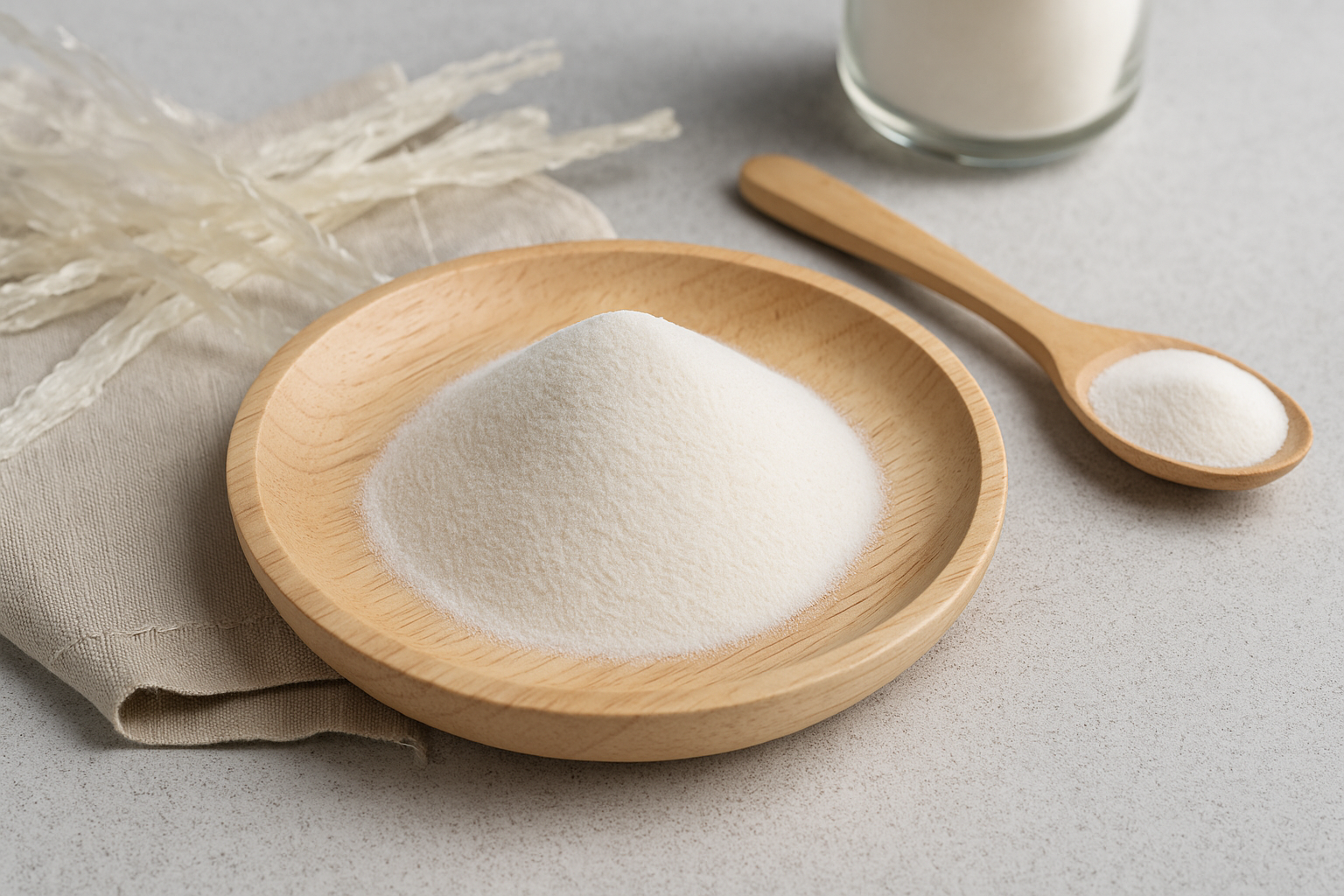
Agar Agar vs Gelatin Conversion Table: Strength, Texture & Heat Differences
SUBSCRIBE TO OUR BLOG
Promotions, new products, and recipes.
Updated January 24, 2026
Quick Answer
Agar agar and gelatin are not 1:1 substitutes. Agar forms firmer, more brittle gels and sets at higher temperatures, while gelatin creates softer, elastic gels that melt near body temperature. This table shows practical conversion ranges, texture differences, and when substitutions work—and when they fail.
Agar agar and gelatin are both gelling agents, but they behave very differently. Many failed desserts and broken gels come from assuming they swap directly. They don’t.
Use the tables below to compare conversion ratios, gel strength, texture, and temperature behavior—then decide whether substitution actually makes sense for your application.
Agar Agar vs Gelatin Conversion Table
When to use: when replacing gelatin with agar (or vice versa) and you need a realistic starting point—not a mythic 1:1 swap.
| Gelatin Amount | Approx. Agar Agar Equivalent | Resulting Texture |
|---|---|---|
| 1 tsp gelatin | ¼ – ⅓ tsp agar | Firmer, cleaner break |
| 1 tbsp gelatin | ¾ – 1 tsp agar | Noticeably stiffer gel |
| 1 packet gelatin (~7 g) | 1.5 – 2 g agar | Set gel, less elastic |
These are practical kitchen ranges. Agar strength varies by brand and form—start low and adjust.
Texture & Gel Strength Comparison
When to use: when mouthfeel matters more than “will it set.”
| Property | Agar Agar | Gelatin |
|---|---|---|
| Gel strength | High (sets firmly at low %) | Moderate (requires more material) |
| Texture | Firm, brittle, clean break | Soft, elastic, bouncy |
| Mouthfeel | Clean, sometimes rigid | Melting, creamy, flexible |
| Clarity | Clear to slightly opaque | Clear |
Heat & Temperature Behavior
When to use: for hot applications, plated desserts, or buffet settings.
| Behavior | Agar Agar | Gelatin |
|---|---|---|
| Hydration | Requires boiling to activate | Blooms in cold water |
| Setting temperature | ~35–40°C (room temp) | ~10–20°C (refrigeration) |
| Melting point | ~85°C (very heat-stable) | ~30–35°C (melts in mouth) |
| Heat stability after set | Excellent | Poor |
When Can Agar Replace Gelatin (and When It Can’t)
- Works well: terrines, aspics, hot-set gels, vegan desserts, plated elements that must hold shape.
- Problematic: panna cotta, mousse, marshmallows, anything relying on elasticity or melt.
- Common fix: reduce agar and blend with another hydrocolloid for flexibility (context matters).
Frequently Asked Questions
Is agar agar stronger than gelatin?
Yes. Agar forms a much firmer gel at lower concentrations and does not melt at body temperature like gelatin.
Can I replace gelatin with agar 1:1?
No. Agar is typically used at roughly one-third to one-quarter the amount of gelatin—and the texture will still be different.
Why does agar feel brittle compared to gelatin?
Agar forms a rigid gel network, while gelatin forms elastic protein chains that stretch and melt.
Does agar need to be boiled?
Yes. Agar must be heated to fully hydrate and activate before it will set properly.

|
About the Author Ed is the founder of Cape Crystal Brands, editor of the Beginner’s Guide to Hydrocolloids, and a passionate advocate for making food science accessible to all. Discover premium ingredients, expert resources, and free formulation tools at capecrystalbrands.com/tools. — Ed |
Related Posts

How Many Grams Are in a Teaspoon? Powder Conversion Guide for 30+ Ingredients

How Modern Food Lost Its Natural Stop Signals

What’s Really in Your Food? The Ingredient No One Talks About
Enjoyed this post? Subscribe to The Crystal Scoop
Food-science tips, ingredient know-how, and recipes. No spam—unsubscribe anytime.
- Choosing a selection results in a full page refresh.
POLICY PAGES
QUICK LINKS
ABOUT US
Cape Crystal Brands,
- 18 Bank St., Suite 1, Summit NJ 07901.
- Phone: +1 908-273-5600
- Email: info@capecrystalbrands.com
- Tax ID: 26-2477626000
- FDA Facility # 16980627550
- Kosher Certified by: OKosher.org
Country/region
© 2026, Cape Crystal Brands | Sitemap